E-MTBs add an electric assist to your pedalling; they do not ride the trail for you. The right trip balances battery range with climbing, surface, technical difficulty and the group’s experience. A useful itinerary explains the terrain and charging plan in advance, leaving room to enjoy the High Atlas rather than worrying about the next battery percentage.
What an Atlas Mountains E-bike tour offers
The High Atlas combines mountain roads, rough tracks, village paths and trails where elevation can change quickly. Pedal assistance can make sustained climbs feel more approachable and can help riders with different fitness levels share a route. It can also allow a group to cover more ground in a day, provided the route, battery capacity and support plan are realistic.
The experience still depends on the chosen terrain. An E-MTB is not the same as a city e-bike: it has to be controlled over uneven surfaces, loose stones and descents, and the added weight affects handling when manoeuvring or lifting the bike. Selecting the route around your skills is just as important as considering the motor.
Choose an itinerary that suits your confidence on the actual surface. A shorter technical trail can be more demanding than a longer route on smoother tracks.
Choose the right route for your group
Scenic valley rides
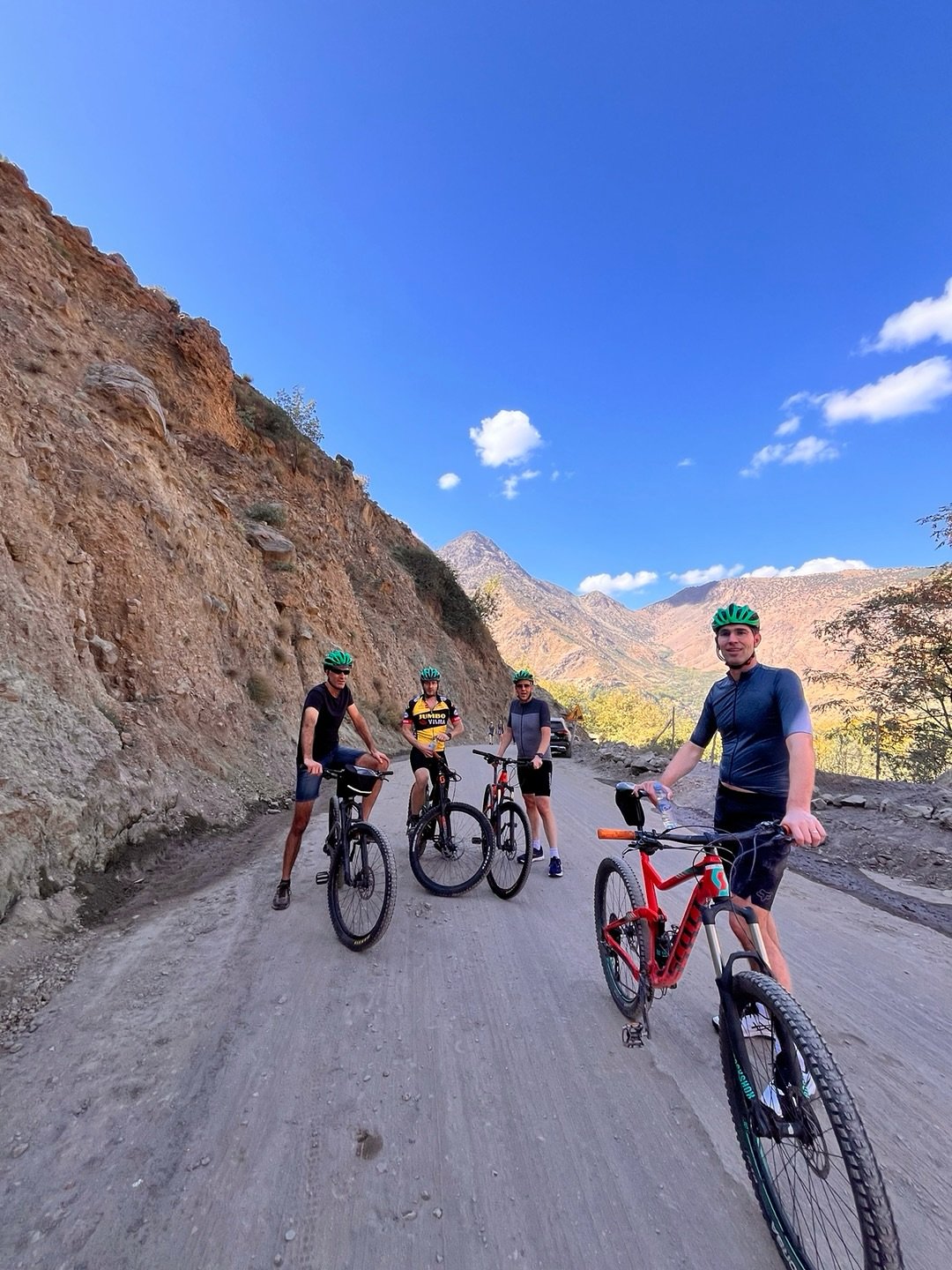
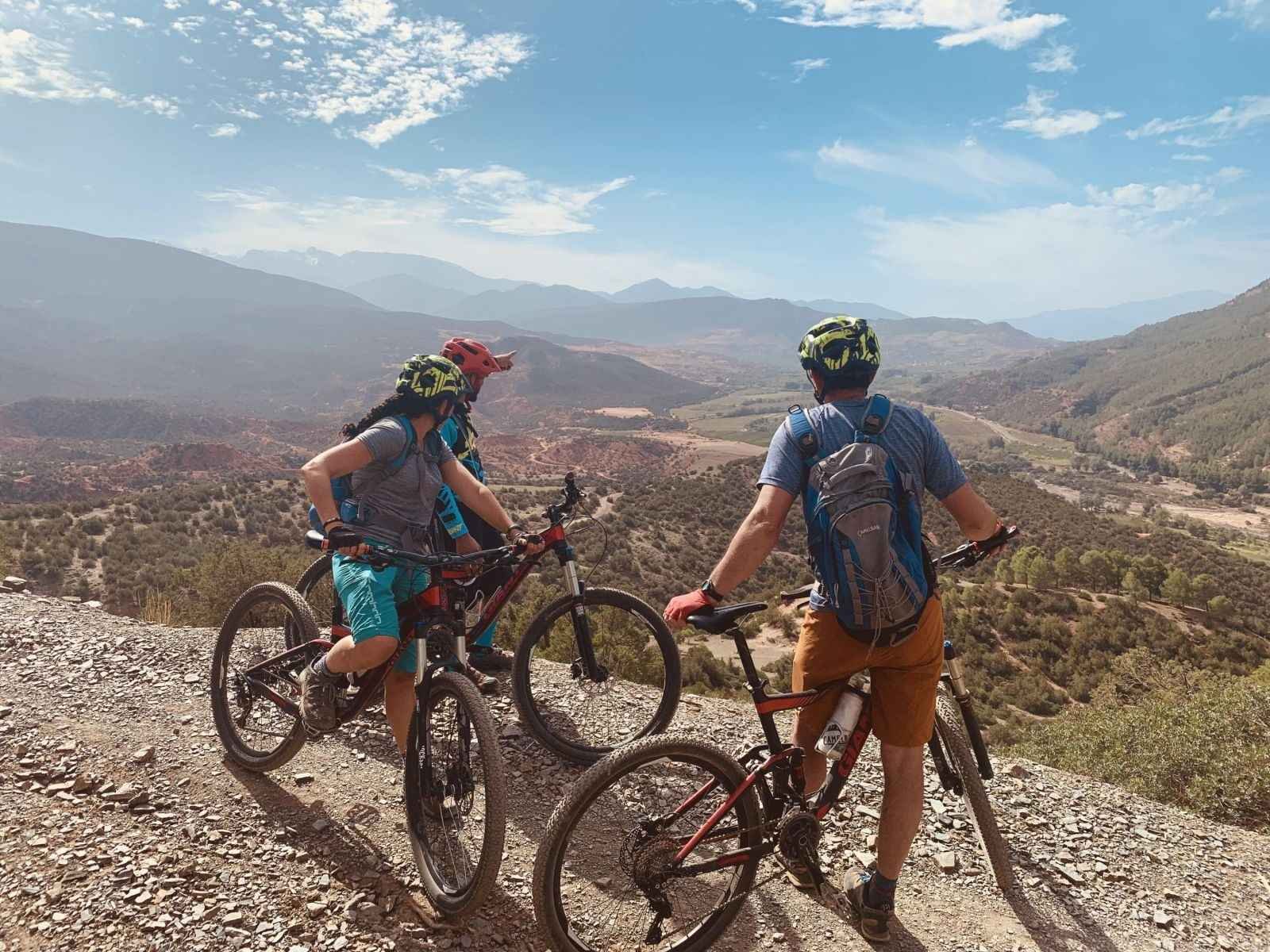
A route through mountain valleys and rural tracks can suit riders who want views and local discovery alongside the cycling. Ask about road and track surfaces, climbing, the amount of time spent on the bike and whether there are quieter sections away from traffic. The route should allow time for stops without leaving the group pressed for daylight.
Longer climbs and mountain crossings
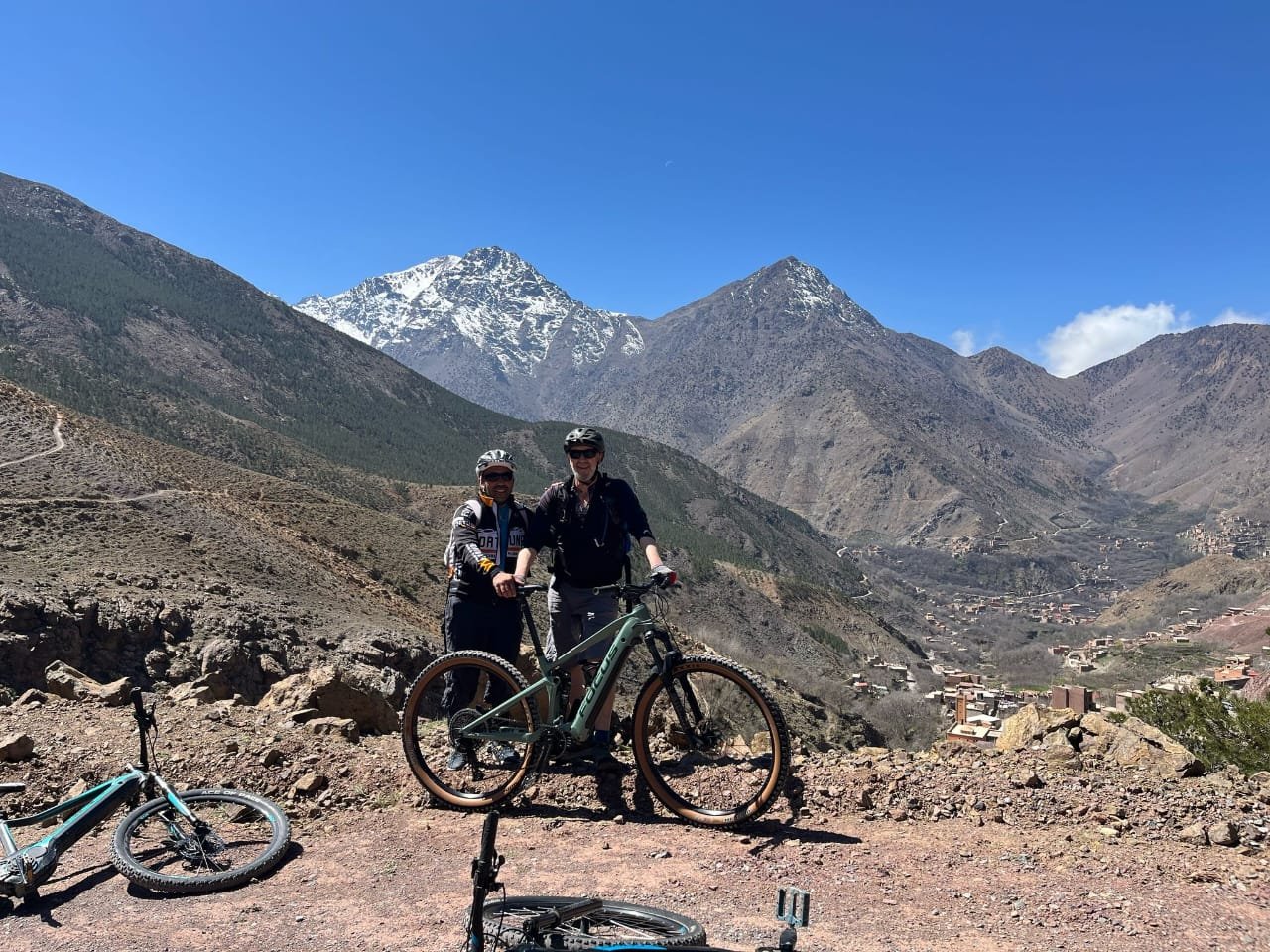
Pedal assistance can help manage sustained ascents, but climbing still uses energy and battery. Before choosing a longer crossing, review the total elevation, distance between resupply points, charging opportunities and whether the route has a practical alternative if conditions change. Confirm whether support vehicles can access the roads or trails planned for each stage.
Technical trail riding
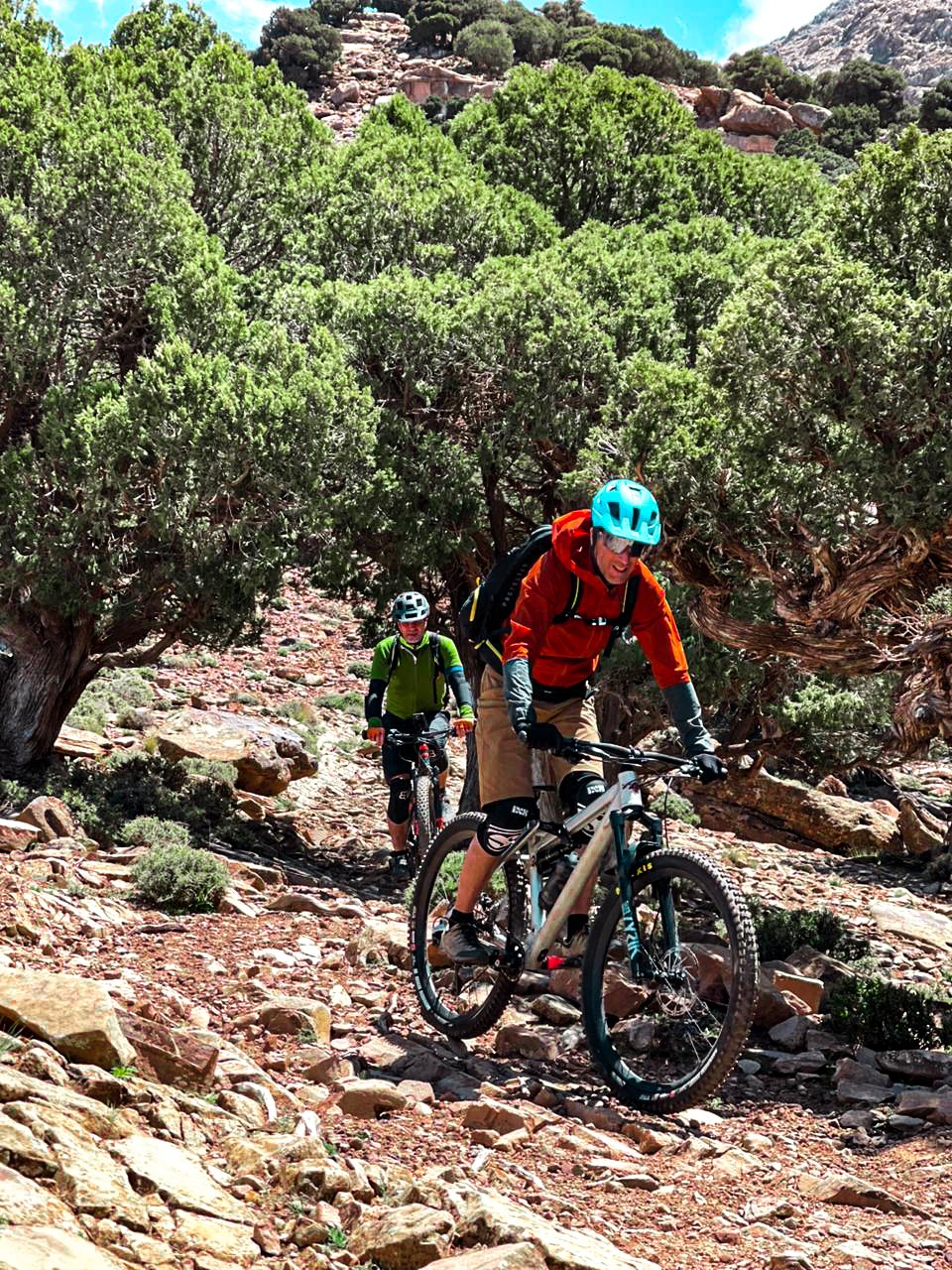
Technical singletrack, rocky traverses and steep descents require confident braking, balance and line choice. Battery assistance on the climb does not make the descent easier to control, and the heavier bike can feel different from a conventional MTB. Ask which sections are technical, exposed or likely to require walking, and make sure the grade is appropriate for the group.
Mixed-ability groups
E-MTBs can help manage differences in climbing fitness, but riders still need to share expectations for speed, technical difficulty and stops. Discuss whether everyone will use an e-bike, how the guide will keep the group together and whether separate options are possible if abilities differ substantially. Plan around the least experienced rider for any shared technical section.
Plan battery range and charging realistically
Battery range is affected by more than the distance on a map. Long climbs, loose surfaces, high assistance settings, rider and luggage weight, tyre pressure, temperature and stop-start riding all influence energy use. Two rides of the same length can have very different battery demands if one includes much more climbing or technical terrain.
Ask for the elevation profile
A route description should include approximate distance, total ascent, surface and expected riding time. Use these details to discuss battery needs with the operator and leave a sensible margin rather than relying on the maximum range printed in a product brochure. If the route is remote, a conservative plan matters more than achieving the longest possible distance in a single charge.
Confirm charging points before departure
- Overnight stops: check whether there is a reliable place to charge and whether you can leave the battery safely while it charges.
- Charger compatibility: confirm that the correct charger will be available and whether you must bring your own.
- Charging time: clarify how much downtime is expected and whether the itinerary allows sufficient time.
- Remote stages: ask what the plan is when there is no reliable power source or vehicle access.
- Contingencies: find out how the group will respond to faster-than-expected battery use, a charging problem or a technical fault.
Never assume a support vehicle can carry a spare battery or follow the full route unless that arrangement has been confirmed. Make battery logistics part of the trip design from the beginning.
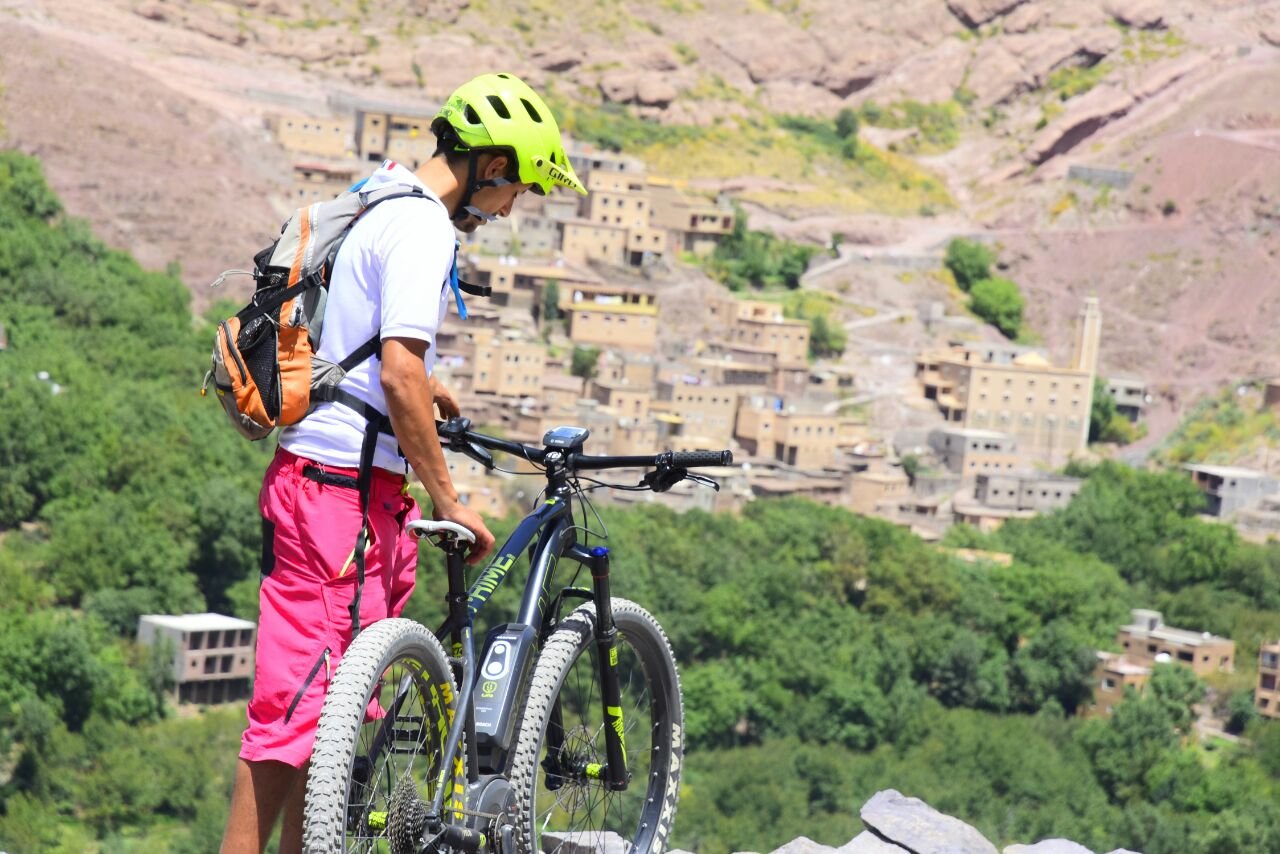
Understand the skills needed on mountain terrain
An E-MTB can help a rider climb, but balance, steering, braking and judgement remain essential. Added weight can make tight turns, steep descents and technical obstacles feel different. Before choosing a trail-focused tour, be comfortable starting and stopping on uneven ground, modulating the brakes, managing traction on loose surfaces and controlling speed on descents.
Choose difficulty honestly
Ask whether a route includes loose rock, narrow paths, steep gradients, exposed traverses, hike-a-bike sections or sections with limited opportunity to turn around. Trail grading varies between operators, so request a practical explanation rather than relying only on labels such as easy, intermediate or advanced. A good ride can be challenging without placing riders beyond their comfort or skill.
Practice the bike before the trip
If you are new to e-bikes, learn how assistance modes work, how the motor responds when you start pedalling and how the bike feels while braking and turning. Practice on familiar terrain before attempting technical mountain tracks. If you have not ridden an MTB before, consider a less technical route first and talk through your experience during the enquiry.
Choose a tour format that fits your time
One-day E-MTB ride
A day ride can introduce the landscape without requiring a multi-day equipment and accommodation plan. Confirm the start point, transfer time if needed, expected riding duration, route surface and battery arrangements. A route closer to the starting point may provide more riding time than a longer transfer to a distant trailhead.
Two- or three-day mountain escape
A short multi-day tour allows more time to explore different valleys or terrain types. The itinerary should say where batteries can be charged, how luggage moves between stops and what happens if a stage has to change. Check whether the daily effort builds gradually and whether there is enough time to recover between rides.
Longer E-MTB expedition
Longer journeys require the most careful planning because routes may pass through areas with limited services. Battery and charging logistics, mechanical support, weather alternatives, food and water access, luggage handling and accommodation need to be considered together. Ask for a day-by-day outline rather than assuming the same support is available on every stage.
Ask for daily distance, ascent, surface, charging plan, start and finish points, accommodation and the support arrangements before deciding whether a tour is right for you.
Check the bike setup and equipment
A comfortable fit and reliable equipment make a major difference when riding for several hours. If a bike is provided, confirm the available frame sizes, fit adjustments, pedals, helmet availability and whether you can test the controls before the ride begins. Ask what inspection is performed before departure and what mechanical support is included.
- Fit and controls: confirm the frame size, saddle position, brake reach and how assistance modes are selected.
- Battery and charger: confirm battery condition, charger compatibility, charging access and any limits on using or transporting batteries.
- Tyres and brakes: ask whether the bike is equipped for the intended terrain and how wear or damage is handled.
- Pedals and helmet: check availability, sizing and whether you should bring your own preferred equipment.
- Repair support: understand what tools and spares are carried and which repairs the rider is expected to handle.
- Personal kit: bring gloves, eye protection, appropriate riding clothing, sun protection and a hydration system sized for the route.
If you bring your own E-MTB, discuss transport, battery handling, charger compatibility and luggage before travelling. Different systems may use different chargers and parts, so do not assume local replacement equipment will match your bike.
Plan for the season and mountain conditions
Conditions in the Atlas change with altitude, recent weather and the particular valley or pass. Lower areas can be warmer while high routes may be cold, windy or affected by snow or rain. For remote riding, current conditions and local route access matter more than a broad seasonal label.
Prepare for temperature changes
Bring layers for early starts and higher elevations, along with sun protection for exposed sections. In warmer conditions, plan for water, shaded breaks and a realistic riding schedule. Ask how the route will be adjusted if heat, wind, rain or poor trail conditions make the original plan unsuitable.
Keep the itinerary flexible
If your trip crosses multiple elevations or regions, leave room to adjust daily stages. Confirm who makes the decision to change a route and whether alternatives are available. This is especially important for e-bikes because changes in climbing, terrain or weather may also change expected battery use.
Confirm safety and support arrangements
Remote mountain routes need clear expectations for communication, first aid, group management and mechanical problems. Ask about guide experience, group size, how riders are kept together and what the support vehicle can reach. A support vehicle may be useful on roads but cannot necessarily access narrow paths or every trail section.
Agree on regrouping points, pace expectations and what to do if a rider has to stop or separates from the group. Riders should have sufficient water, suitable clothing and a way to contact the guide or group according to the route plan. Do not depend on mobile coverage being available everywhere.
For E-MTB tours, support also includes the battery and electrical system. Clarify the plan for an electrical fault, a battery that drains more quickly than expected or a charger problem during a multi-day itinerary. The answer may differ by route, so confirm it rather than assuming a replacement bike or battery is always available.
Ride responsibly through Atlas villages and landscapes
Mountain routes may pass through working villages, shared paths and areas used by walkers or animals. Reduce speed through settlements, give others space, ask before photographing people and respect private property. Follow local guidance, avoid shortcuts that damage trails and leave gates as you find them.
Carry out rubbish, use refill options where available and avoid leaving battery or packaging waste behind. E-MTB assistance does not change the responsibility to ride within your skill level or respect other trail users. Stop only where safe and make room for people using the path for everyday travel.
Before you book an Atlas E-bike tour
A useful enquiry includes your travel dates, group size, usual cycling experience, fitness, preferred terrain and whether everyone needs an e-bike. Tell the organiser if you have previous e-MTB experience or if you are new to mountain biking. These details help clarify what type of route, bike setup and support are appropriate.
- Ask for the route’s distance, ascent, surface, technical level and expected riding time.
- Confirm the exact bike and frame sizes, pedals, helmet and condition checks.
- Request a realistic battery and charging plan for each day.
- Clarify support, spare parts, contingency arrangements and what happens if the bike has a fault.
- Confirm accommodation, meals, transfers, luggage handling and what is included in the price.
- Check the weather and route access close to departure and understand how the itinerary can change.
Ask for written details if anything is unclear. A well-planned tour should make the riding demands, battery logistics and included services understandable before you confirm your booking.
Frequently asked questions
Are Atlas Mountains E-bike tours suitable for beginners?
Some routes may suit newer riders who already feel comfortable controlling a bike, while rocky tracks, steep descents and narrow mountain paths require more skill. Pedal assistance helps with climbing effort; it does not remove the technical demands of steering, braking or descending. Share your experience honestly and choose a route based on the least confident rider in the group.
How far can an E-MTB travel on one battery?
There is no reliable single distance for every ride. Range depends on battery capacity, total climbing, terrain, rider and luggage weight, tyre pressure, temperature, assistance mode and how much power is used. Ask for the route’s elevation profile and expected riding conditions, then discuss a conservative range estimate with the operator rather than planning around the maximum figure on a battery specification.
Can batteries be charged during a remote multi-day tour?
Charging opportunities depend on the overnight stops, accommodation and route. Do not assume there is electricity at every remote stop or that a vehicle can follow every trail. Confirm where charging is planned, how long charging takes, whether chargers are compatible and what the contingency is if a battery or charger fails.
Do I need mountain-bike experience for an E-MTB tour?
You should be comfortable starting, stopping, braking and turning on the surfaces planned for your route. E-bikes are heavier than many conventional bikes and the extra assistance can make speed and traction harder to judge on steep or loose terrain. For technical trails, previous MTB handling experience is important even if you are very fit.
What should I check before hiring an E-MTB in Morocco?
Confirm frame size, fit, battery and charger arrangements, motor and battery condition, pedals, helmet availability, tyre setup and what happens if a mechanical problem occurs. Ask whether the bike is suitable for the intended terrain and whether spare batteries or replacement bikes are part of the support plan. Get the equipment and inclusions confirmed for your dates.
When is the best time for an Atlas E-bike holiday?
The best timing depends on route elevation, recent weather and the kind of terrain you plan to ride. Higher mountain areas can be cool or affected by changing conditions while lower routes may be warm. Spring and autumn are often considered for many cycling itineraries, but check the actual forecast, access and route suitability for your chosen dates before travelling.