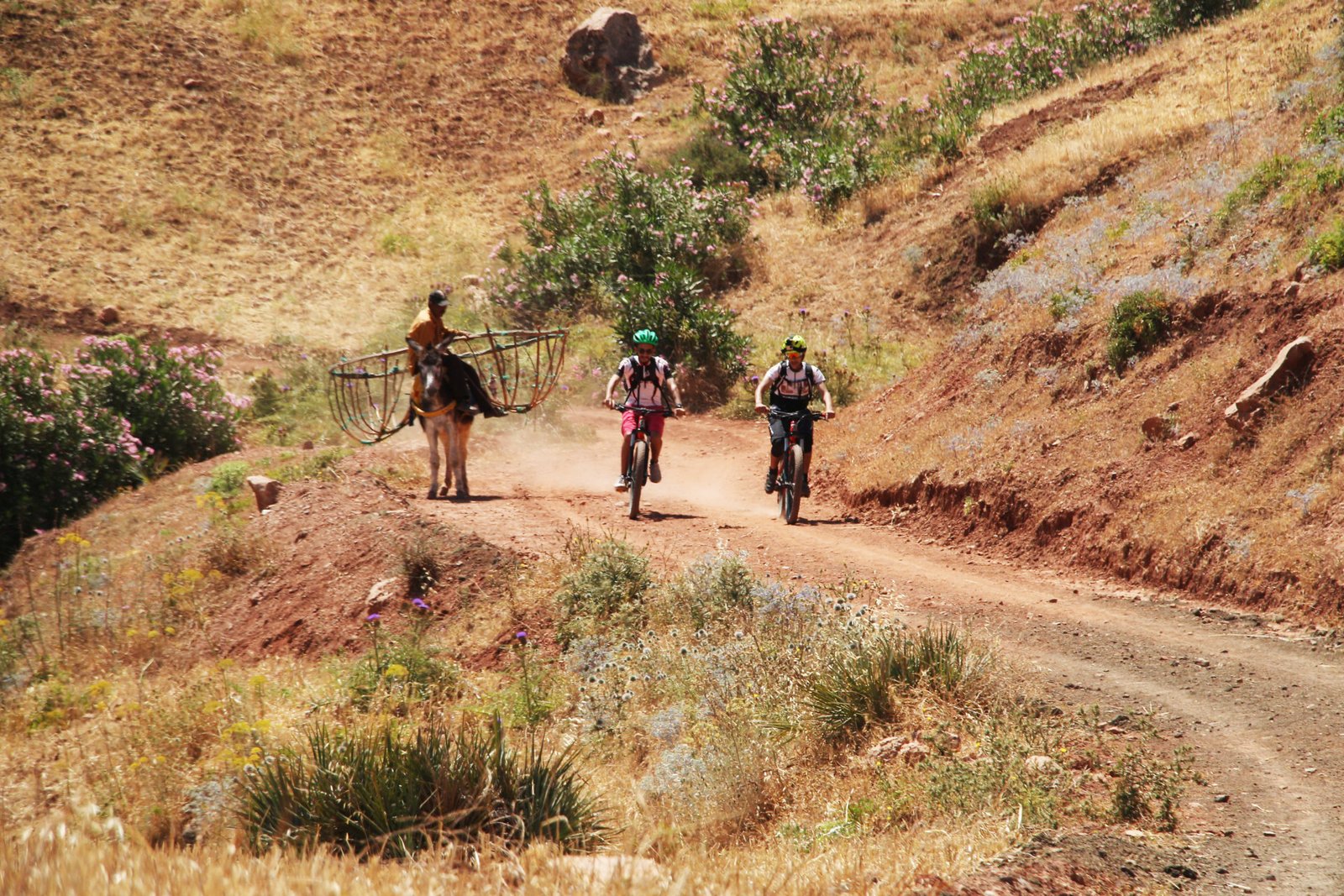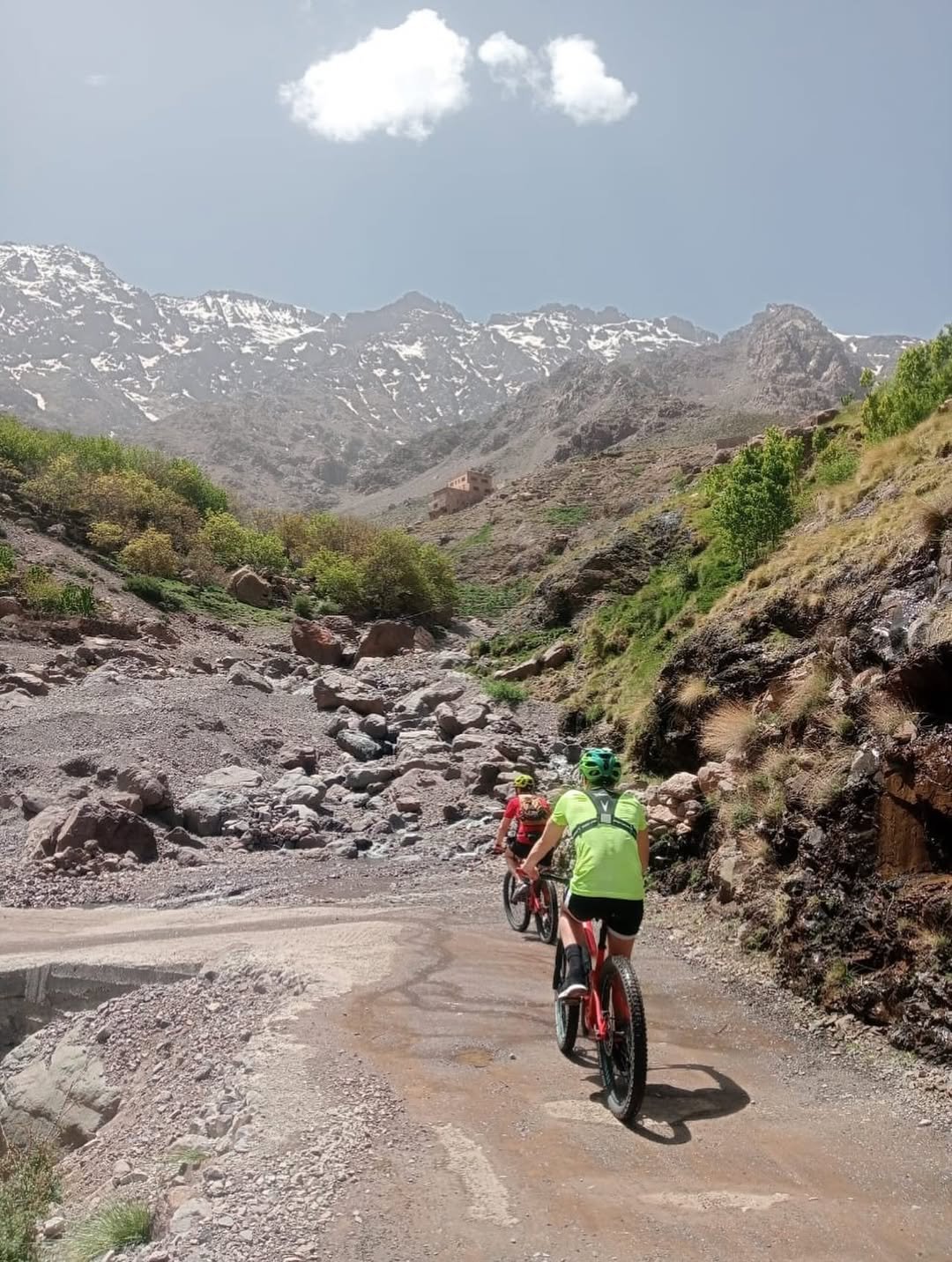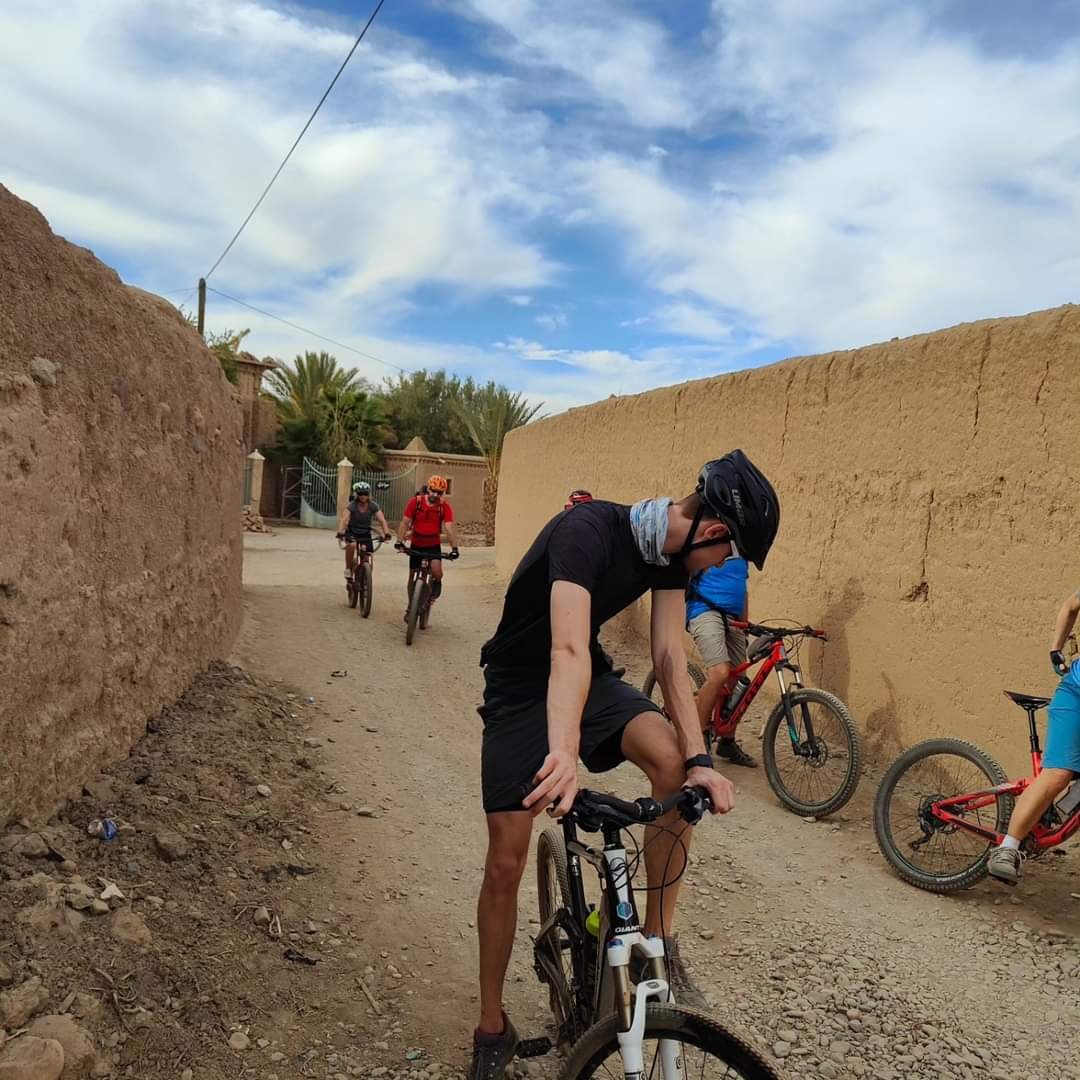
Morocco brings together high mountain routes, dry foothills, desert landscapes and an Atlantic coastline. These areas do not share one climate. Use seasonal information to narrow your options, then confirm the conditions for the specific route and dates you are considering.
Start with the region, not just the month
A spring ride in a mountain valley can feel very different from a spring ride in an exposed desert landscape. Elevation influences temperature, high passes can experience cold or unsettled conditions, and coastal routes may be shaped by wind. Even within one itinerary, a long transfer between regions can mean a significant change in conditions.
Begin by deciding whether your priority is Atlas singletrack, assisted mountain climbs, rural gravel roads, scenic road cycling or a longer desert expedition. Once the main region and riding style are clear, discuss the route surface, daily distance, climbing and support plan with the organiser.
Spring cycling in Morocco
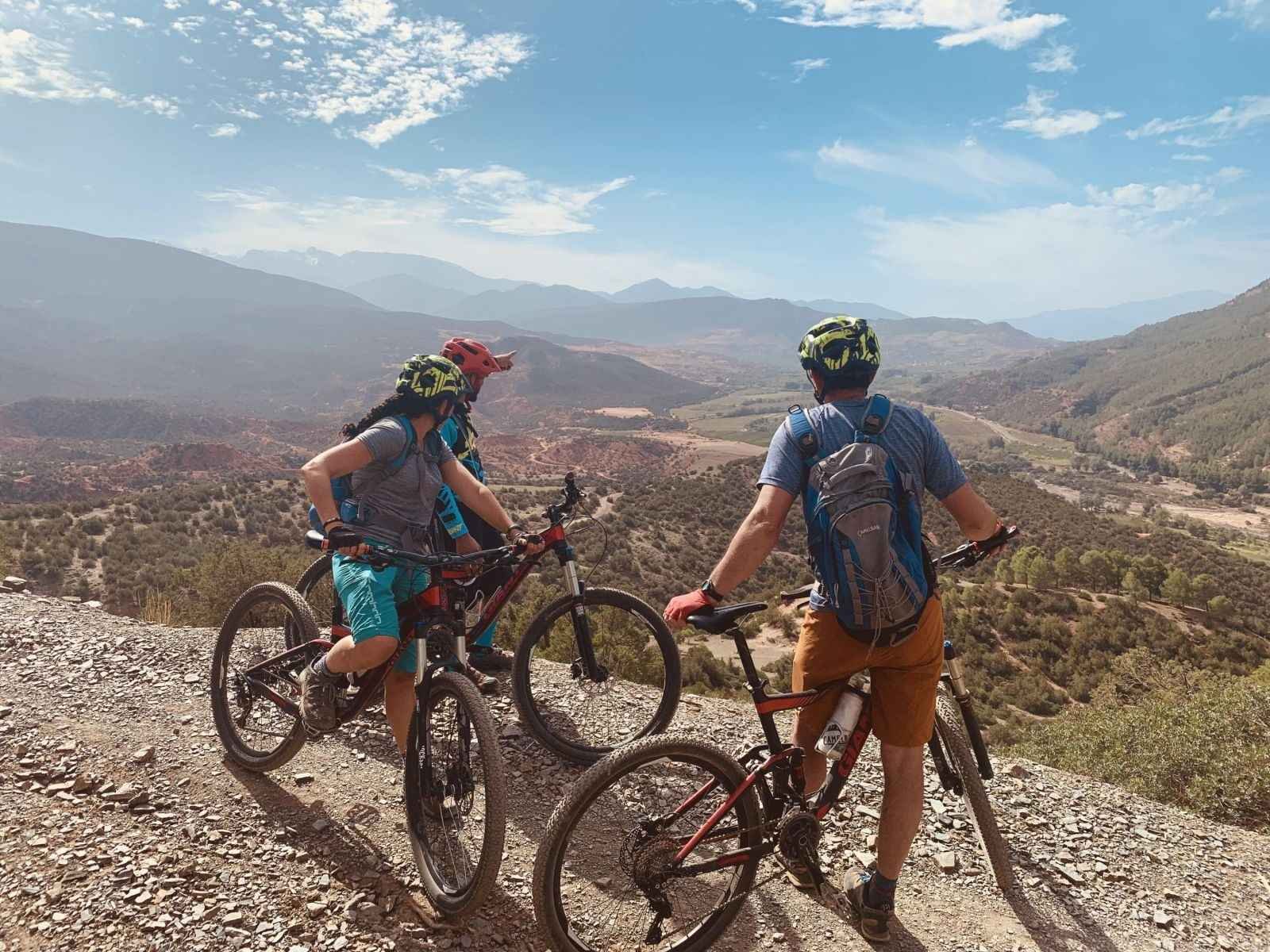
Spring can work well for many cycling holidays, particularly where riders want to combine mountain scenery with lower-elevation routes. Conditions still change with altitude and recent weather. Mornings in the mountains may be cool, and higher routes can remain affected by winter conditions even when lower valleys feel mild.
What to plan for
Pack layers that can be adjusted during the day, and ask whether the planned route includes high passes or exposed ridgelines. A flexible itinerary can be useful if a stage needs to be adapted. For more detailed month-by-month preparation, see our spring cycling guide.
Summer cycling: manage heat and exposure
In hotter months, exposed lowland and desert routes can become physically demanding. A ride that is manageable in cool conditions may be uncomfortable when temperatures rise, especially where shade and services are limited. Higher elevations can offer a different experience, but do not remove the need for sun protection, hydration and realistic pacing.
Ask about early starts, the amount of shade, reliable water access, the distance between resupply points and whether the schedule can be shortened if conditions require it. Never rely on a generic description of a region as “cooler” or “hotter” instead of checking current local conditions for the actual route.
Agree on water capacity, refill opportunities, turnaround points and the support response before setting out on a remote or exposed stage.
Autumn cycling: plan around changing temperatures
Autumn is often considered for mountain and multi-region trips because conditions can be more comfortable than during the hottest period. However, mornings and evenings can cool quickly, particularly at elevation, while lower and southern areas can remain warm. Wind and recent weather may also change how exposed routes feel.
For a September, October or November trip, choose the intended riding area first and use month-specific guidance to refine your packing and daily schedule. Our guides to cycling in September and cycling in October cover those considerations in more detail.
Winter cycling: choose lower routes carefully
Winter can bring cold mornings and difficult conditions at higher elevations. Snow, ice, rainfall or strong wind may affect the suitability of mountain routes and passes. Lower areas can be more practical for some rides, but the conditions still depend on the weather and the exact route.
If travelling in winter, ask which stages have flexible alternatives, whether any passes are essential to the itinerary and how the organiser monitors changing conditions. Bring warm layers for early starts and descents, and make sure the route has sensible options if weather makes a planned section unsuitable.
How conditions vary by region
High Atlas Mountains and Imlil
Elevation, exposure and mountain weather are central considerations. Check the expected conditions for the particular valley or pass, and ask how much climbing and technical terrain a ride includes. The same date can be comfortable at one elevation and much colder higher up.
Marrakech and Agafay
These areas can offer accessible day rides and open rocky landscapes, but heat, sun exposure, surface and water planning matter. An early start and a route with clear support arrangements can make a significant difference in warmer periods.
Sahara and southern Morocco
Desert trips need careful planning for heat, wind, large day-to-night temperature differences and the distance between services. Ask for the full resupply and support plan rather than relying on a season label alone.
Atlantic Coast
Coastal rides may be affected by wind and variable conditions along exposed stretches. Clarify the surface mix, traffic exposure and planned stops, especially if your itinerary combines paved roads with gravel or rural tracks.
Choose dates for your cycling style
Mountain biking and enduro
Technical trails depend on surface conditions, access, elevation and rider ability. Ask about loose sections, steep descents and alternatives if a route is wet, snow-affected or otherwise unsuitable.
E-MTB
In addition to seasonal conditions, plan battery range and charging around the terrain, climbing, assistance mode and the availability of support. Do not assume remote stages have convenient charging options.
Gravel cycling
Ask about the mixture of hard-packed tracks, loose gravel, rough ground and paved connections. Surface changes affect comfort, speed, tyres and daily distance, especially after weather has altered a track.
Road cycling
Temperature, climbing, wind, road surface and traffic conditions all influence the day. Choose distances around elevation and support as well as the number of kilometres, and confirm road conditions close to departure.
Prepare for the season and route
Seasonal advice is a starting point, not a forecast. As your trip approaches, check the current weather, route access and any local guidance for mountain passes, rural tracks or remote desert stages. For multi-day rides, the plan should allow for rest, transfers and changes when conditions require them.
Share your group’s riding experience, preferred bike type, daily-distance expectations and any equipment requirements before booking. The more clearly you understand what each stage involves, the easier it is to choose a suitable season and itinerary.
Pre-trip checklist
- Choose the destination and riding style before picking dates.
- Ask about elevation, road or trail surface, distance and daily effort.
- Confirm bike availability, size, fit, equipment and mechanical support.
- Plan for water, sun protection, layers and expected conditions.
- Clarify accommodation, transfers, food stops and remote-stage support.
- Recheck forecasts and route access close to departure.
Frequently asked questions
What is generally the best season for cycling in Morocco?
Spring and autumn are often practical starting points for many itineraries, but there is no single ideal season for every region or discipline. Altitude, route surface, wind, heat and current access conditions can change what works best. Choose the destination and riding style first, then review conditions for your intended dates.
Can I ride in the Atlas Mountains during winter?
Some lower routes may be suitable, but higher areas can be very cold or affected by snow, ice or weather-related access issues. Do not assume a high pass or mountain trail will be rideable. Confirm the exact route and recent conditions before departure and keep an alternative plan available.
Is summer too hot for cycling in Morocco?
Summer heat can make exposed lowland and desert routes demanding, particularly around the middle of the day. Higher elevations may be cooler but can still have strong sun and changing weather. Routes, start times, water capacity, shade and support need to be planned for the actual conditions.
When should I visit for a Sahara cycling trip?
Desert trips require careful attention to daytime heat, overnight temperatures, wind, water and distance between services. Many riders look to cooler parts of the year, but the right dates depend on the route and conditions. Confirm the support plan, resupply points and contingency arrangements before booking.
Does the best time change for MTB, gravel and road cycling?
Yes. MTB depends heavily on trail condition, technical terrain and elevation; gravel trips need reliable surfaces, navigation and resupply; road rides are influenced by temperature, traffic, wind and climbing. E-MTB trips also require realistic battery and charging plans. Match the season to both the region and your chosen bike style.
How far in advance should I confirm the route?
Start with your dates, experience, preferred daily effort and the areas you want to visit. Ask for a realistic route outline, accommodation and transfer plan, equipment arrangements and support details. Recheck forecasts, trail access and road conditions close to departure because seasonal guidance cannot replace current local information.