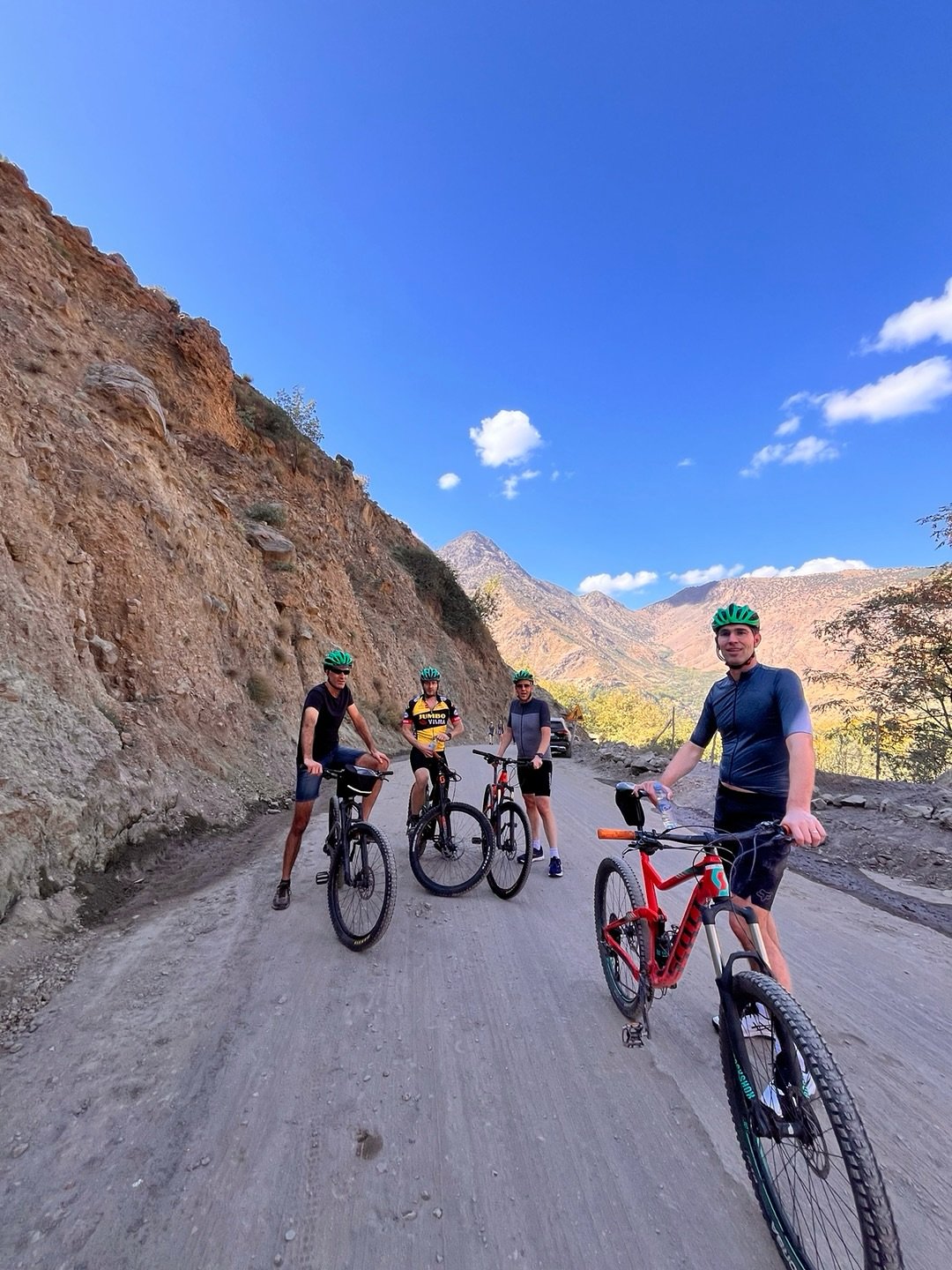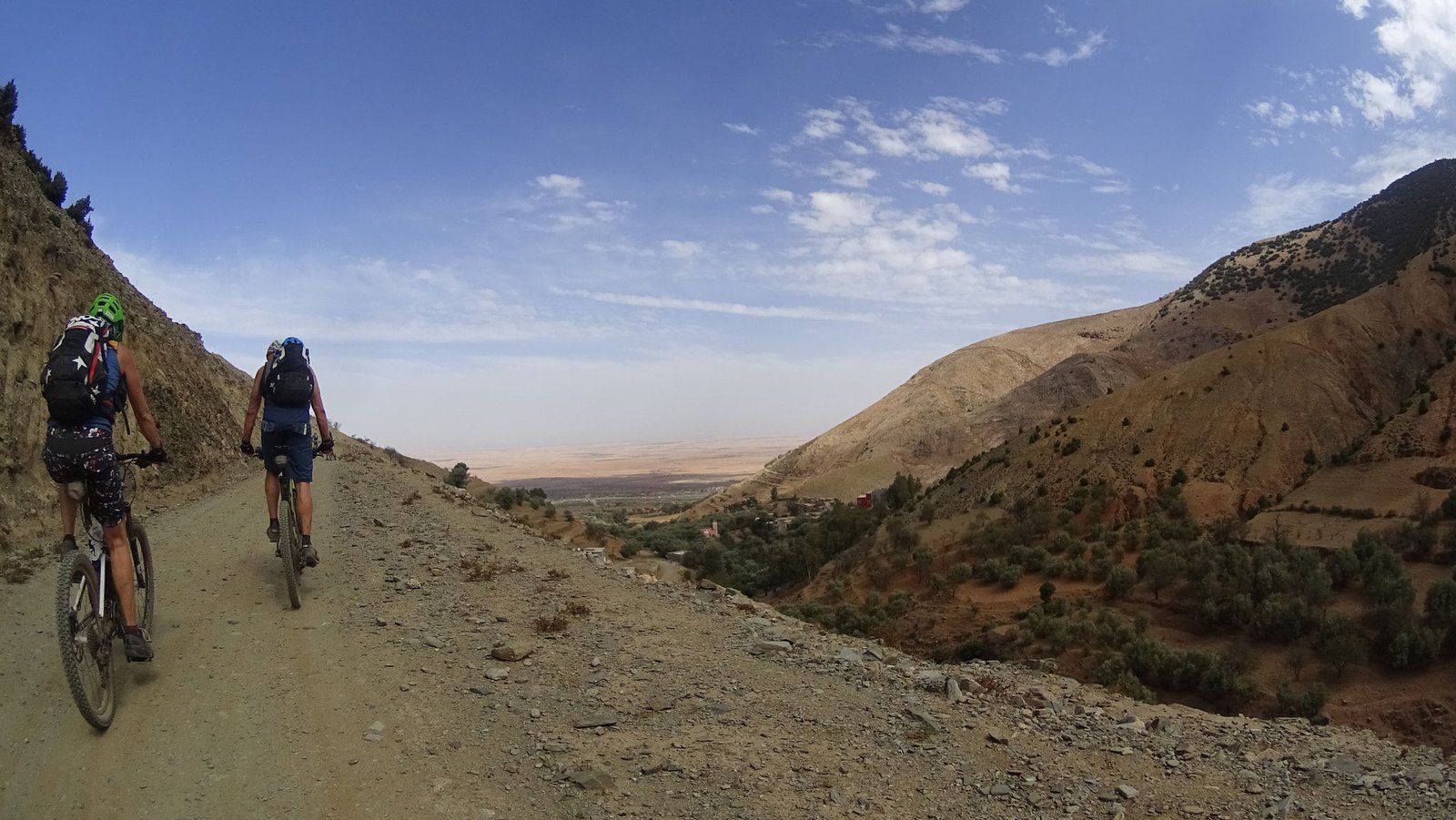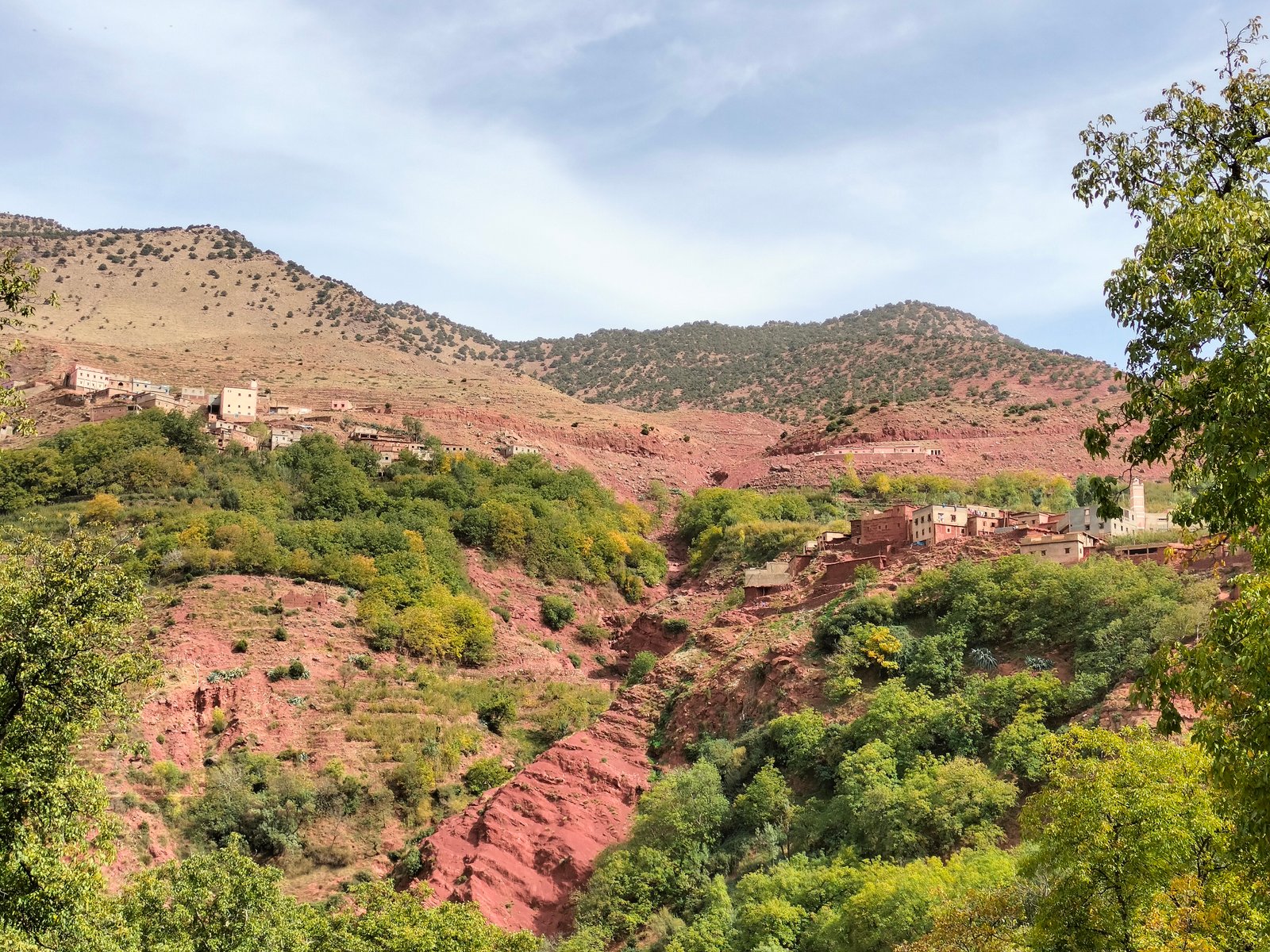
A successful cycling trip from Marrakech is planned around the full experience, not only the kilometres on the bike. The start point, road conditions, surface, climb, transfer time and group pace all affect how the day feels. A little planning makes it easier to choose a route that fits your time and riding preferences.
First, choose the kind of cycling trip you want
Some visitors want a guided day ride that fits around a wider stay in Marrakech. Others prefer to spend several days cycling through foothills and valleys, or use the city as the beginning of a longer journey into the High Atlas or towards southern Morocco. These formats have different logistical needs, so it helps to decide how much of your holiday should be spent riding before comparing tours.
For a day outing, consider the total time from leaving your accommodation to returning, including transfers, bike fitting, stops and lunch. For a multi-day journey, think about daily stage length, accommodation changes, luggage, rest time and how the itinerary connects one region to another.
Share your dates, group size, cycling style and recent riding experience. These details help narrow the route choices before you decide on a full itinerary.
Where to ride from Marrakech
Marrakech countryside and foothills
Routes in the countryside around Marrakech can suit riders looking for an accessible introduction to cycling in Morocco. The exact surface and traffic exposure vary by route. Ask where the ride begins, how the route avoids busy roads where possible, and whether the itinerary is better suited to a road bike, gravel bike or mountain bike.
Agafay and open rocky terrain
The Agafay area offers open, rocky landscapes that feel different from high mountain valleys. Route planning should account for surface, exposure to sun and wind, water capacity and the availability of support. A dry-looking landscape does not mean every track is smooth or suitable for every bicycle.
The Atlas foothills and High Atlas
For a more mountain-focused experience, a transfer from Marrakech may connect you with higher valleys, rural tracks and routes with sustained climbing. Altitude, weather and terrain can change how demanding a stage feels. Confirm expected elevation, technical sections and the return or overnight arrangements before booking.
Longer journeys beyond the city
Multi-day itineraries may link several riding areas or continue into southern landscapes. These routes need a stage-by-stage plan for accommodation, food, luggage transfers, vehicle support where included and what happens if conditions require a change. Avoid assuming that every region can be connected comfortably in one day; transfer distances and ride time both matter.
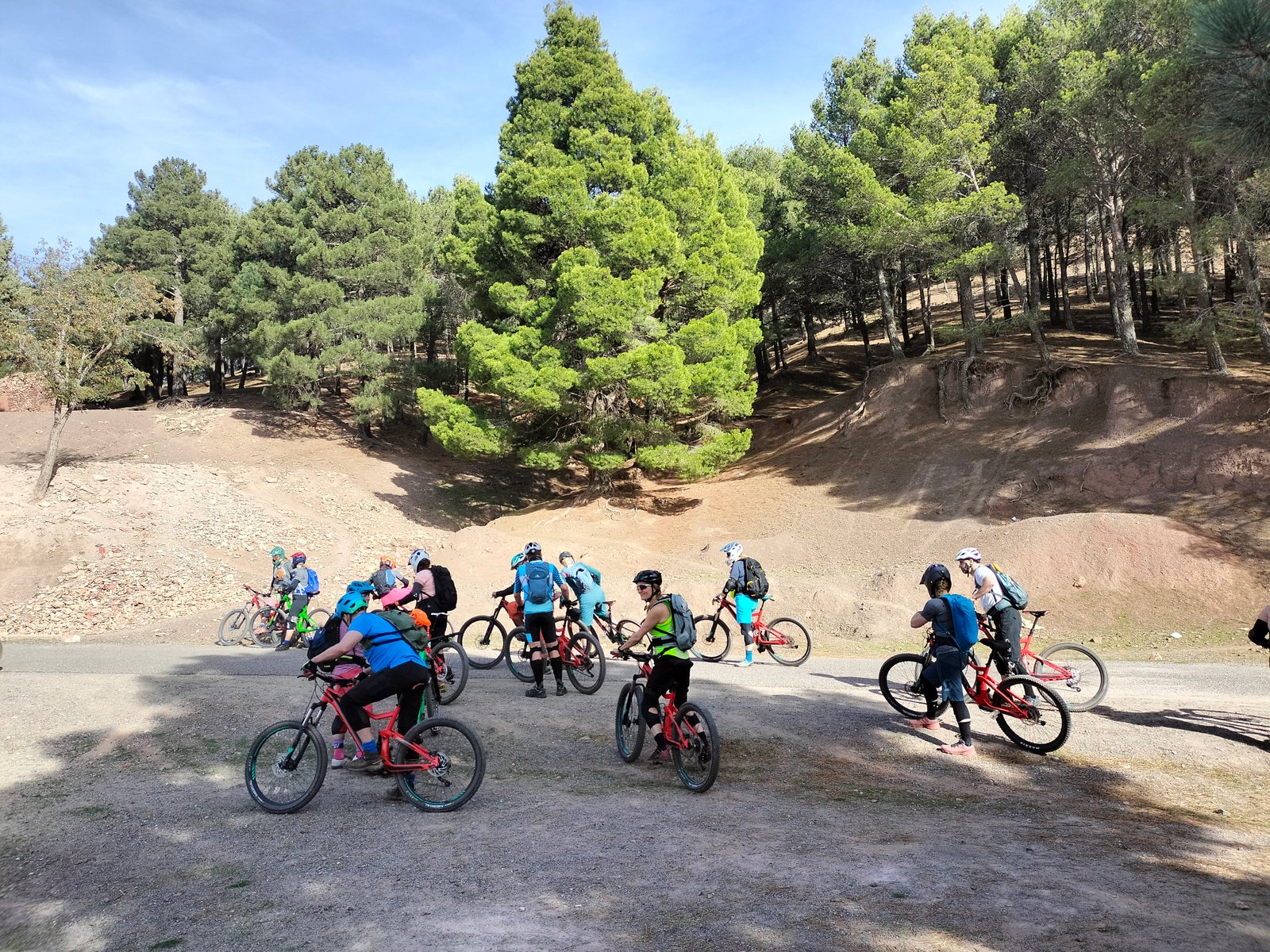
Choose a cycling style that matches the route
Mountain biking (MTB)
MTB is often the right choice when the itinerary includes rough tracks, rocky surfaces or technical trails. Ask about trail width, loose sections, steepness, exposure and any places where riders may need to walk. Your experience on similar terrain is just as important as general fitness.
Electric mountain biking (E-MTB)
An E-MTB can support longer climbs and help riders manage a varied day, but battery range and charging need to be included in route design. Check the bike type, sizing, battery plan, charging access and the level of technical riding expected.
Gravel cycling
Gravel can be a good fit for itineraries that combine paved backroads with suitable unsealed tracks. Ask for a clear surface description, tyre recommendations, daily elevation and the roughest sections. Some rocky or steep tracks are better suited to MTB than to a gravel bike.
Road cycling
Road cyclists may prefer paved loops, mountain climbs or point-to-point routes. Discuss road quality, traffic, climbing, descent conditions and the support plan. A scenic route should still have realistic timing and safe places for stops.
Plan timing, meeting points and transfers
A cycling day often starts before the first pedal stroke. Confirm the pickup location, departure time, transfer duration, bike setup arrangements and expected return. If the ride begins well outside the city, make sure the schedule allows enough time for the route and planned breaks without rushing the return journey.
For multi-day trips, ask where each stage starts and ends and how riders and luggage move between locations. Clarify whether any road sections are covered by transfer, whether the vehicle follows the group or meets it at specific points, and how those arrangements work if a rider needs to stop early.
Choose realistic distance and daily effort
Distance alone is not a reliable measure of difficulty. A short technical route can take longer than a paved ride of greater length, while sustained climbing, heat, wind, altitude and luggage can increase the effort of a stage. Ask for the elevation gain, surface mix, approximate riding time and planned stops as well as kilometres.
If your group includes different fitness levels, share that in advance and ask whether the route can be adjusted. It is often better to have a comfortable pace with time for scenery and breaks than to plan an ambitious distance that leaves no room to enjoy the day.
For a multi-day holiday, consider accumulated fatigue. A sequence of demanding stages needs recovery, food, hydration and enough time to settle into accommodation. Build flexibility into the itinerary where possible so the plan can respond to weather or a change in group energy.
Equipment, bike hire and support
Before you travel, confirm whether bikes are provided or whether you should bring your own. Ask about available models, frame sizes, pedals, helmets, adjustment time and what personal kit is expected. If you bring your own bicycle, clarify bike-case storage, transfer space and whether assembly support is available.
Support varies between trips, so check exactly what is included. This may involve a guide, luggage transfers, mechanical help, food and water resupply or a support vehicle, but none should be assumed without confirmation. Ask what tools and spares are carried, who to contact if a problem occurs and how the plan handles route changes.
Request a written outline of guiding, transfers, bike arrangements, accommodation, meals, luggage handling and any extra costs before confirming your booking.
Season, clothing and preparation
Conditions differ between Marrakech, open foothills and higher mountain areas. Temperatures, wind, rainfall and daylight can affect comfort and route choice, particularly when an itinerary moves between elevations. Ask about the likely conditions for your exact route and dates rather than relying on one general seasonal rule.
Bring a correctly fitted helmet, gloves, eyewear, suitable shoes, hydration capacity, sun protection and a light layer for changing conditions. Higher routes may feel cooler than the city, and longer trips may need clothing for both riding and evenings. Follow the organiser's route-specific advice on water, food, repair kit and personal medication.
Questions to ask before you book
- Route: Where does the ride start, what surfaces are included, and what is the climbing and technical level?
- Schedule: How long are the transfers, riding time, stops and expected return?
- Equipment: Is a suitable bike available, and what should you bring yourself?
- Support: What happens with punctures, mechanical issues, fatigue or changing conditions?
- Inclusions: Which meals, transfers, accommodation, luggage services and guiding are covered?
- Flexibility: Can the route or daily effort be adapted to the group if needed?
Pre-trip checklist
- Share your dates, group size, cycling style and recent riding experience.
- Confirm the start point, transfers, planned riding time and return arrangements.
- Review the route surface, elevation, difficulty and seasonal considerations.
- Confirm bike hire or own-bike logistics, equipment and mechanical support.
- Check what food, water, accommodation, luggage handling and transfers are included.
- Ask for the final itinerary and contact details before travelling.
FAQs: Cycling tours from Marrakech
Can I start a cycling tour directly from Marrakech?
Yes, many itineraries can use Marrakech as the starting point, but the exact ride may begin in the surrounding countryside or a mountain area reached by transfer. Ask where the cycling starts, how long the transfer takes and how much riding time is planned before the return journey.
Which cycling style is best for a Marrakech-based trip?
It depends on your preferred terrain and the route. Road bikes suit paved routes, gravel bikes suit suitable mixed-surface itineraries, and MTB or E-MTB options are often better for rougher tracks and technical trails. Confirm the actual surface and difficulty before choosing equipment.
Can I book a one-day ride or a multi-day tour?
Both formats may be possible depending on the route and arrangements. A day ride should account for transfers, bike setup, breaks and the return trip. A multi-day itinerary also needs realistic stages, accommodation, luggage logistics, recovery and support plans.
How do I choose a route for my ability?
Share your recent riding experience, fitness, preferred daily distance, climbing comfort and technical confidence. Ask for the surface mix, elevation gain, expected riding time and any sections that may be steep, loose or exposed. This is more useful than choosing a route by distance alone.
Is a support vehicle included?
Support varies by itinerary and should be confirmed in writing. Ask whether transfers, luggage transport, water and food resupply, mechanical assistance and any emergency arrangements are included, and what you are expected to carry yourself.
What should I tell you when enquiring about a Marrakech cycling trip?
Include your travel dates, group size, preferred cycling style, riding experience, desired trip length and any bike or accommodation preferences. If you have a specific region in mind, mention it; if not, share what you want from the ride and ask which options may suit.