A good MTB tour from Marrakech is about more than finding a trail. The most rewarding ride combines suitable terrain, a realistic distance, an appropriate level of technical challenge and enough time to enjoy the landscapes. Before choosing a tour, understand what the route involves and make sure the riding style matches your abilities and expectations.
Why start a mountain bike tour from Marrakech?
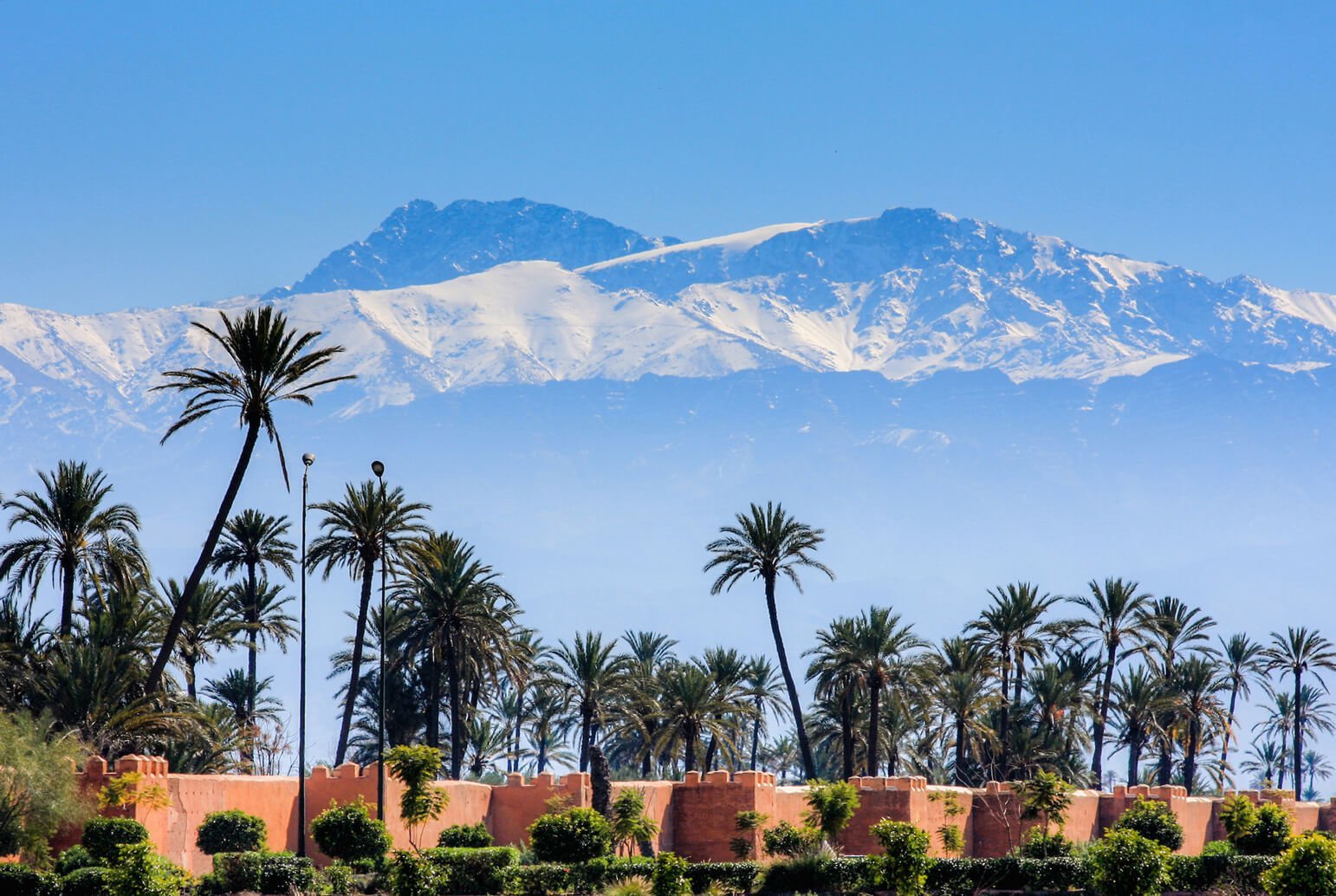
Marrakech offers a convenient base for a cycling holiday, with accommodation, restaurants, transport connections and access to several different landscapes. Depending on the itinerary, a ride can head towards rural countryside, the foothills of the Atlas Mountains or more open, rocky terrain beyond the city.
This variety makes it possible to plan different kinds of mountain biking experiences. Riders with limited time may prefer a day trip, while those seeking a deeper exploration can consider a multi-day itinerary with overnight stays outside the city. The best option depends on your available days, fitness, riding experience and preferred balance between cycling and cultural activities.
Marrakech is a starting point rather than a guarantee of easy trail access. Some riding areas require a transfer before the ride begins. Ask how long the transfer takes, where the route starts and finishes, and whether transport is available after the ride.
Decide whether you want flowing singletrack, scenic dirt roads, challenging descents or a longer cross-country journey. These experiences can involve very different terrain and technical demands, even when the daily distances are similar.
Explore the trails and terrain around Marrakech
Atlas foothills and mountain valleys
The Atlas foothills and surrounding valleys offer a mountain landscape of changing elevation, rocky ground, rural tracks and traditional settlements. Routes can combine climbs with long descents, but the difficulty depends on the exact trail and conditions. A scenic mountain route is not necessarily an easy route, particularly when loose stones, steep gradients or narrow sections are involved.
When comparing itineraries, ask about the total ascent as well as the distance. Find out whether climbing is continuous or broken into shorter sections, whether any parts require walking with the bike and how technical the descents are.
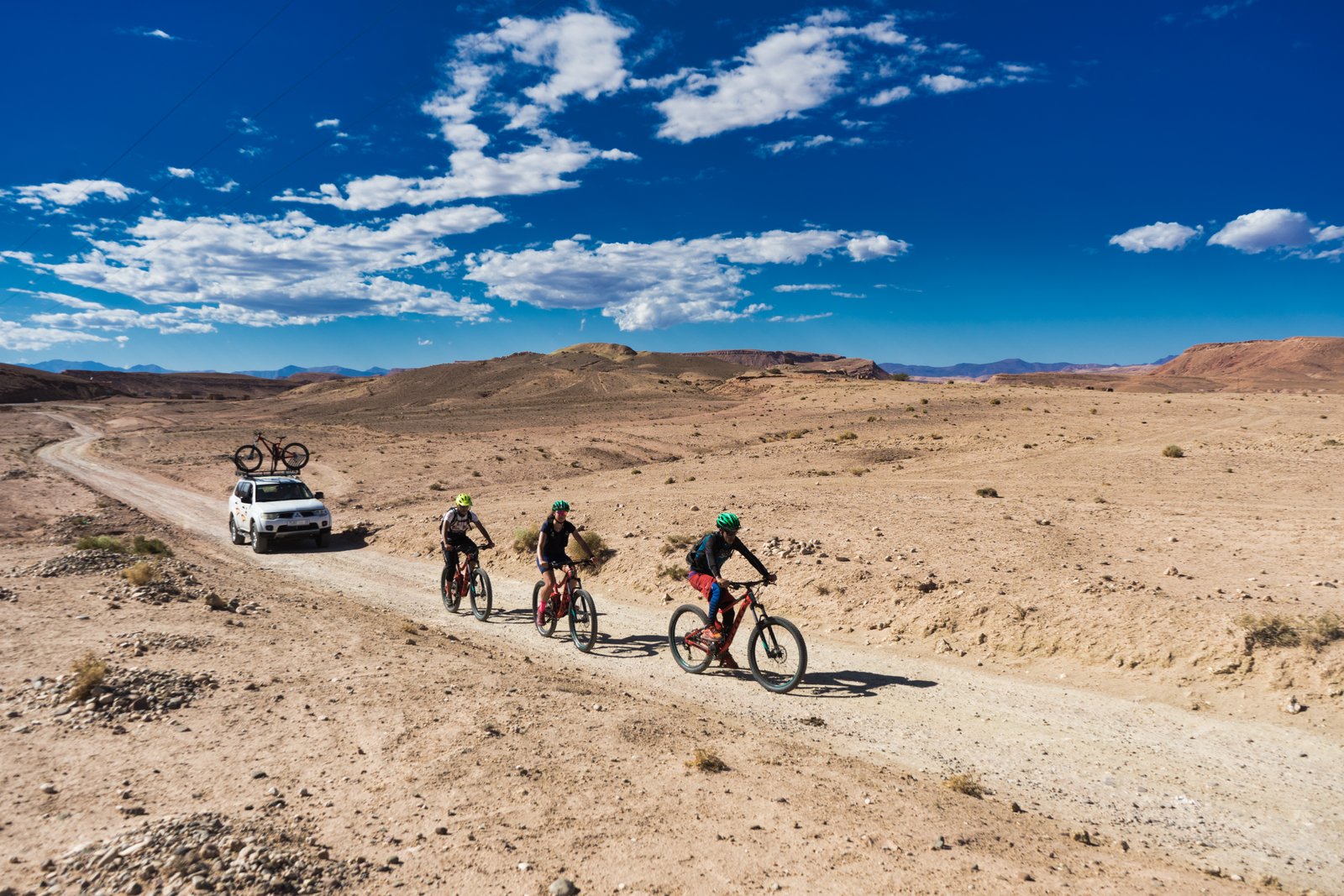
Rural tracks and countryside routes
Riding through the countryside can provide a more relaxed way to experience the landscapes around Marrakech. Depending on the itinerary, the route may follow compact dirt tracks, gravel roads and paths connecting rural areas. Surface quality can change after weather events or with local use, so the same distance may feel very different from one day to another.
These routes can be appealing to riders who enjoy exploring rather than concentrating entirely on technical trails. Still, confirm the amount of climbing, the condition of the surface and the suitability of the route for your bike.
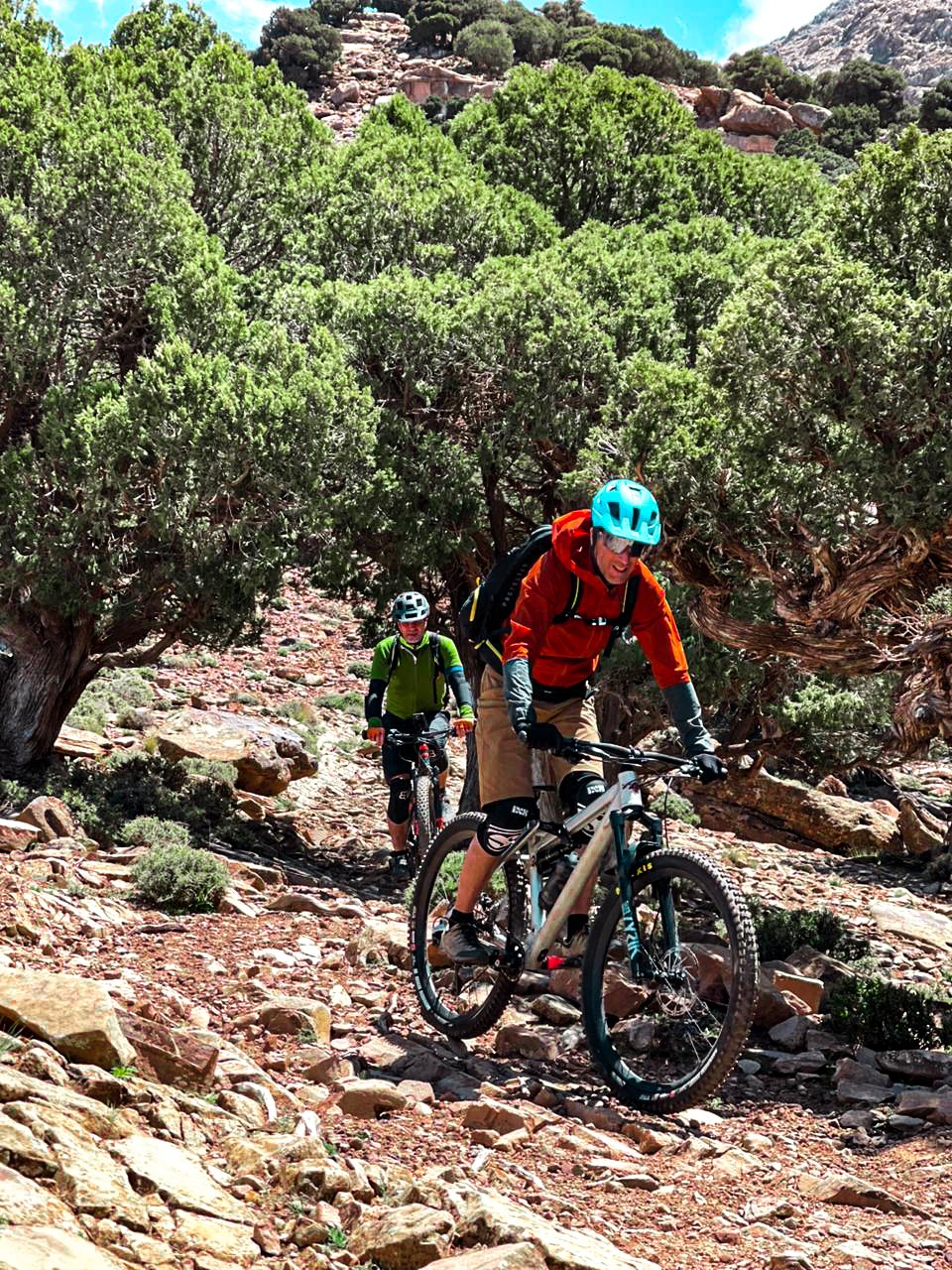
Rocky terrain and natural singletrack
More technical routes may include narrow paths, loose rock, uneven ground, sharp turns and steep descents. These features reward confident handling and good braking control. They can also make a route unsuitable for riders who are new to off-road cycling.
Ask the guide to describe the most technical sections rather than relying on broad labels such as intermediate or advanced. If you are uncertain, choose a route with options to walk difficult sections or adapt the ride when conditions require it.
For broader route inspiration, read our Best Cycling Routes From Marrakech guide and our Complete High Atlas Mountains Cycling Guide.
Choose an MTB route that fits your plans
The right route depends on the kind of day you want to have. Some riders prefer a shorter ride with time for photographs, village stops and lunch. Others want sustained climbing, technical descents or a full day on the bike. Establish your priorities before comparing tour descriptions.
Day trips from Marrakech
A day trip can suit visitors who want to experience mountain biking without changing accommodation. Check the full schedule, including transfers, bike setup, riding time and the expected return to Marrakech. A trip advertised as a full day may include significant transport time, so clarify how much time you will actually spend riding.
Multi-day mountain biking adventures
A multi-day itinerary gives you more time to explore different landscapes and travel beyond the immediate surroundings of Marrakech. It also requires planning for accommodation, meals, luggage, bike maintenance and recovery between stages. Ask how daily distances and elevation change over the trip and whether there are alternatives if a stage proves too demanding.
Private and customised routes
A private itinerary can be useful when riders have different experience levels, specific travel dates or a preferred riding style. Share your background honestly and explain whether you prioritise flow, scenery, technical terrain, fitness or cultural stops. A customised plan should still be based on actual route conditions and realistic daily stages.
Before booking, request distance, ascent, estimated riding time, surface types, technical features, transfer duration and the available options if you need to shorten the ride.
Understand difficulty, fitness and technical skills
Mountain bike difficulty has several parts. Physical effort depends on distance, climbing, altitude, temperature and how continuously you ride. Technical difficulty depends on the surface, gradients, obstacles, corners and the amount of control required on descents.
A fit road cyclist may be comfortable riding for several hours but still need time to develop confidence on loose stones or narrow singletrack. Similarly, an experienced trail rider may need to adjust expectations when a route includes sustained climbing or a long day in exposed conditions.
Be clear about the trails you normally ride, your experience descending on rough ground and the distance you can comfortably manage. Ask whether the guide can adjust the route to suit your ability, and whether walking a difficult section is a practical option.
- Check both physical effort and technical difficulty.
- Ask for total ascent, descent and estimated riding time.
- Explain your experience on loose and rocky terrain.
- Discuss alternatives for difficult or exposed sections.
Guides, transfers and trip logistics
A local guide can help with navigation, route selection and adapting the ride to the conditions. Before booking, ask about the guide's experience with your preferred riding style, the group size and how the pace is managed. Make sure the itinerary includes clear meeting arrangements and contact information.
Transfers are an important part of many rides outside Marrakech. Confirm where you will be collected, how long the journey takes and whether the vehicle can transport your bike safely. For multi-day tours, clarify how luggage, meals and accommodation are handled and what support is available if you experience a mechanical problem.
Ask what happens if the weather changes or a trail is unsuitable on the day. Responsible planning includes the flexibility to modify the route when conditions, safety or the group's ability make the original plan impractical.
When is the best time for an MTB tour from Marrakech?
Spring and autumn are often popular periods for cycling in Morocco because conditions can be comfortable in many areas. However, the best time depends on the route, altitude, weather and the type of riding you prefer. Conditions in Marrakech may differ considerably from those in mountain valleys or at higher elevations.
Spring
Spring can offer pleasant riding conditions in many locations, but mountain weather can still change quickly. Ask about temperatures at the route's highest point and whether recent rainfall has affected the trail surface.
Summer
Lower and exposed routes can become very hot in summer. Early starts, adequate water and a realistic riding schedule are especially important. Higher elevations may offer different conditions, but should not be assumed to be cool or safe without checking the forecast.
Autumn and winter
Autumn can be suitable for a range of rides, depending on conditions. Winter brings shorter days and potentially cold, wet or snowy weather at higher elevations. Confirm current trail conditions and bring layers appropriate to the elevation and expected weather.
Seasonal guidance is a starting point rather than a live forecast. Check conditions close to departure and remain flexible if the route needs to change.
Choose your bike and prepare your equipment
Mountain bike or E-MTB?
A conventional mountain bike can be suitable for a wide range of off-road routes when its frame size, tyres, gearing and suspension are appropriate. An E-MTB provides pedal assistance on climbs, but it is heavier and its battery range depends on elevation, assistance level, rider weight and terrain.
Choose based on the actual route and your riding experience, not simply on the distance advertised. Confirm the available sizes, bike condition, helmet arrangements and whether you can test the setup before starting the ride.
What to pack
Bring a properly fitted helmet, gloves, suitable cycling shoes, comfortable riding clothes, sunglasses or protective eyewear, sunscreen and sufficient water. Lightweight layers can help with changing conditions, especially when a ride gains elevation. Take any personal medication and consider snacks suitable for a long day outdoors.
Confirm whether the organiser supplies tools, spare tubes, repair equipment, refreshments and a support vehicle. If you are bringing your own bike, discuss transport, assembly and any tools or parts specific to your setup.
Ride responsibly and respect local communities
Many routes pass through working countryside and inhabited villages. Slow down near homes, pedestrians, livestock and other trail users. Give people plenty of room, follow local guidance and avoid blocking paths or entrances when stopping.
Stay on appropriate established routes and do not cut across cultivated land. Ask permission before photographing people, carry your rubbish out and treat local customs with respect. Responsible riding helps protect access to the landscapes and communities that make cycling in Morocco rewarding.
Conditions and access can vary between locations. Follow your guide's advice and do not assume that every visible track is suitable or open for cycling.
MTB tour from Marrakech: booking checklist
- Route: Confirm the location, surface, distance, elevation gain and estimated riding time.
- Difficulty: Ask about technical descents, loose ground, exposed sections and hike-a-bike portions.
- Guide: Clarify group size, pace, route adjustments and communication arrangements.
- Transport: Confirm pickup location, transfer duration and bike transport arrangements.
- Equipment: Check bike size, condition, helmet, tools, spares and any E-MTB charging requirements.
- Support: Ask what happens if there is a mechanical problem, bad weather or a need to shorten the ride.
- Conditions: Check the forecast and confirm the route is appropriate for the expected conditions.
Frequently asked questions
Can I take an MTB tour from Marrakech?
Marrakech can be a convenient starting point for mountain biking excursions into nearby countryside and the Atlas foothills. The available route depends on your dates, riding experience, trail conditions, transport arrangements and the type of mountain biking you want to do. Confirm the actual route and logistics before booking.
What type of terrain can I expect?
Depending on the route, mountain biking around Marrakech can include rural tracks, rocky paths, loose surfaces, climbs, descents and sections of natural singletrack. Conditions vary considerably between locations. Ask for a route description that explains the surface, elevation gain, technical sections and any hike-a-bike portions.
Do I need previous mountain biking experience?
The experience required depends on the trail. Some routes may suit confident recreational cyclists, while technical singletrack and steep rocky descents require stronger bike-handling skills. Be honest about your experience on loose surfaces, corners, braking and descents so the route can be matched to your ability.
What is the best time for mountain biking near Marrakech?
Spring and autumn are often attractive periods for riding, although conditions depend on altitude, weather and the exact route. Summer can be hot in lower and exposed areas, while mountain temperatures may differ from those in Marrakech. Check the forecast and ask about trail conditions for your planned dates.
Should I choose a mountain bike or an E-MTB?
A conventional mountain bike may be suitable for riders who want a traditional, lightweight riding experience. An E-MTB can assist on climbs and help manage longer routes, but it is heavier and requires battery planning. Choose according to the route, your fitness, handling experience and the equipment available.
What should I bring on an MTB tour?
Bring a correctly fitted helmet, gloves, suitable cycling shoes, comfortable clothing, sun protection, enough water and any personal medication you need. Depending on the season and elevation, light layers may be useful. Confirm whether the organiser supplies the bike, helmet, tools, spare parts, refreshments and transport.