What is an e-bike tour in Morocco?+
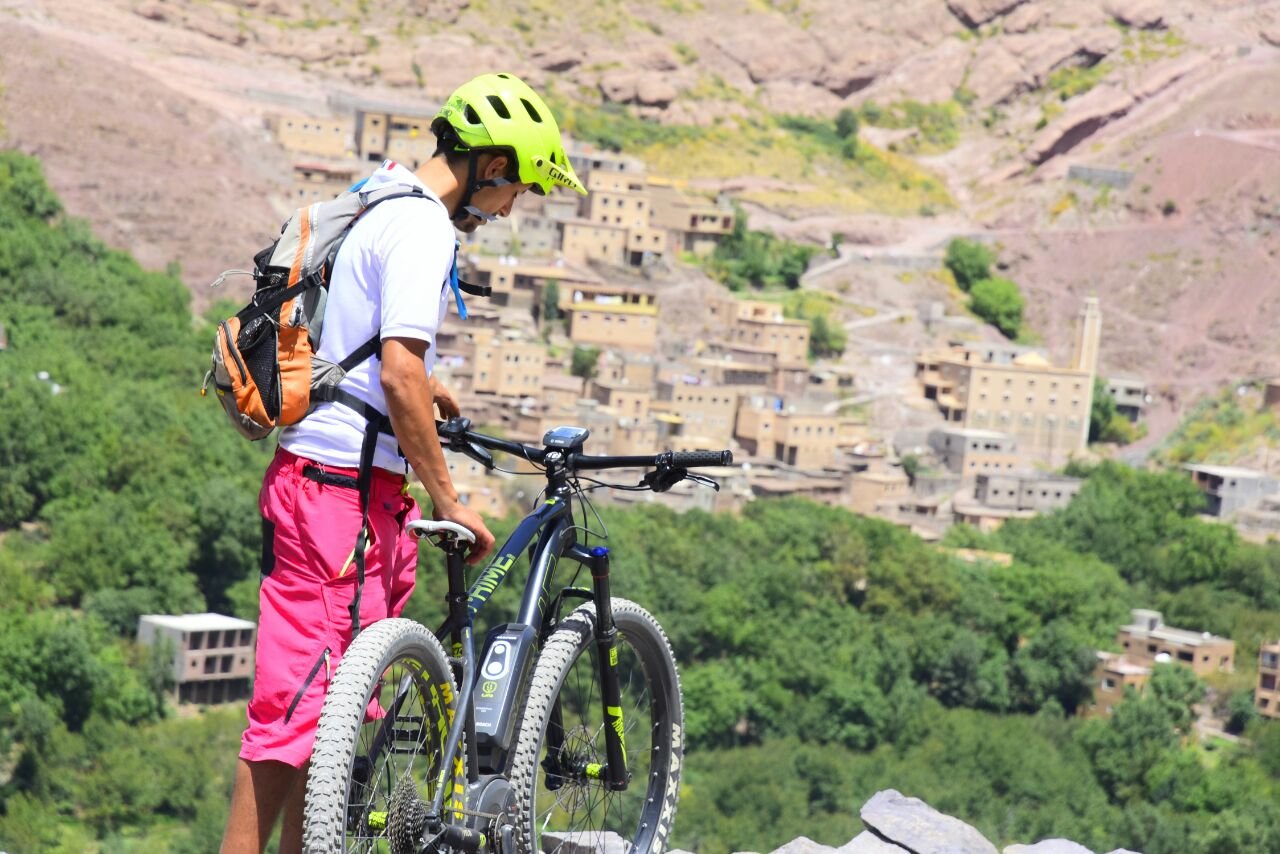
An e-bike tour uses an electric-assisted bicycle to help with pedalling while you explore trails, mountain roads and countryside routes. The motor provides assistance when you pedal; it does not turn the bicycle into a motorbike. On an electric mountain bike, assistance can make climbs and longer rides more manageable, but you still need to pedal, steer, brake and control the bike on changing surfaces.
Where can I go on an e-bike tour in Morocco?+
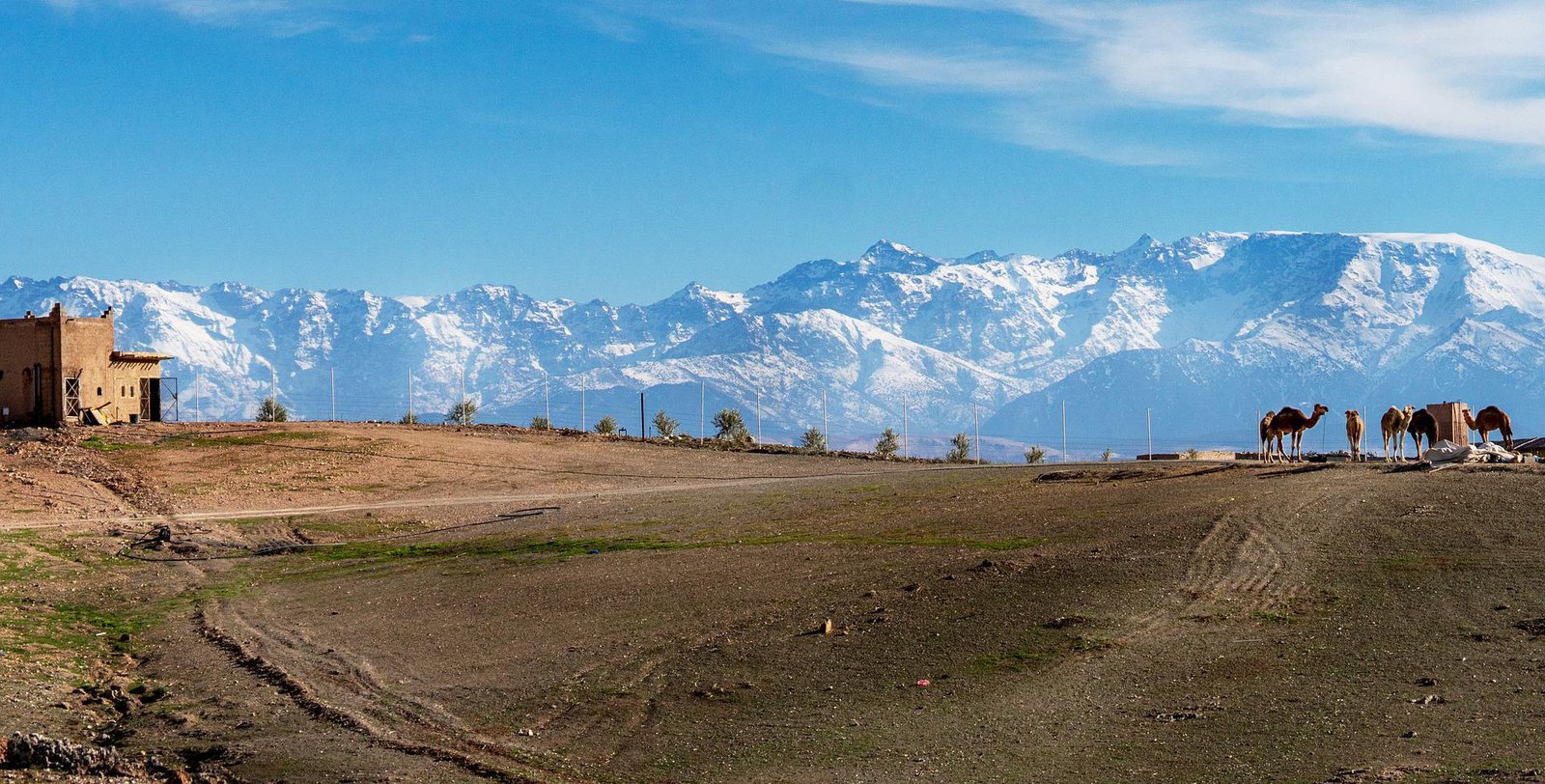
The High Atlas Mountains, Imlil and the countryside around Marrakech are among the areas to consider. Other itineraries may explore Agafay and landscapes in southern Morocco. Each destination offers different terrain and conditions. The most suitable area depends on your travel dates, riding experience, preferred surfaces, available time and the route that can be arranged for your group.
Do I need experience riding an electric mountain bike?+
Previous mountain biking experience is useful, especially on rough tracks, steep gradients and technical descents. An electric mountain bike can be heavier than a conventional bicycle, and its assistance changes how the bike responds when climbing. Riders who are new to E-MTBs should become familiar with the bike's weight, braking, handling and assistance settings before attempting demanding terrain.
Can beginners join an e-bike tour in Morocco?+
Some easier routes may suit recreational riders with basic cycling skills, but not every mountain trail is appropriate for beginners. Electric assistance helps with pedalling uphill; it does not remove the need for balance, braking skills or confidence on loose surfaces. Share your cycling background honestly when enquiring so that the route and daily effort can be discussed before choosing a trip.
How far can I ride on an e-bike battery?+
There is no single battery range that applies to every ride. Range varies according to the bike and battery, rider weight, elevation, assistance setting, temperature, tyre pressure, trail surface and riding style. Long climbs, rough ground and higher assistance levels can use more energy. A suitable itinerary should allow a realistic battery margin rather than relying on the maximum range stated by a manufacturer.
How are e-bike batteries charged during a multi-day tour?+
Charging arrangements depend on the route, accommodation and equipment being used. Before confirming a multi-day trip, ask where batteries will be charged, whether charging is available at each overnight stop, how long charging takes and what happens if a battery cannot be charged as planned. Remote stages may require additional planning or support, so the charging plan should be considered alongside daily distance and elevation.
What happens if my battery runs low during a ride?+
A low battery can make a climb or a long stage more demanding, particularly on a heavy electric mountain bike. The group should understand the expected battery use and the route's charging or support arrangements before setting out. Ask how the itinerary accounts for unexpected battery consumption, mechanical problems or a change in weather, especially on routes away from towns and regular services.
Are e-bike tours suitable for technical singletrack?+
Not every technical trail is suitable for every electric mountain bike or rider. E-MTBs can be heavier than conventional mountain bikes, and narrow, steep or highly technical trails require appropriate handling skills and suitable equipment. The route should be chosen for the actual bike, the surface and the group's ability. Tell us what kind of riding you enjoy so that the terrain can be discussed before your trip.
What type of terrain can I expect?+
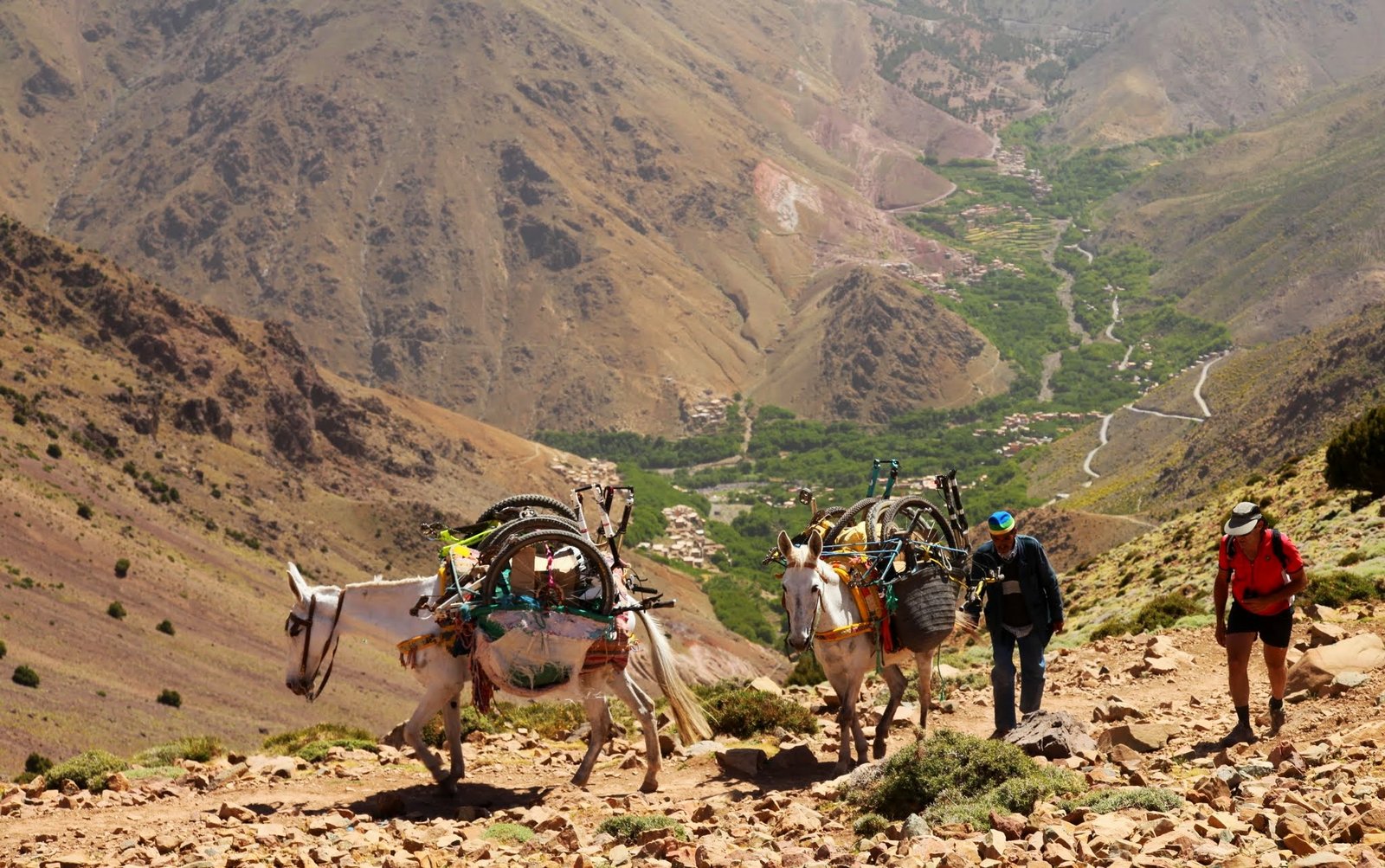
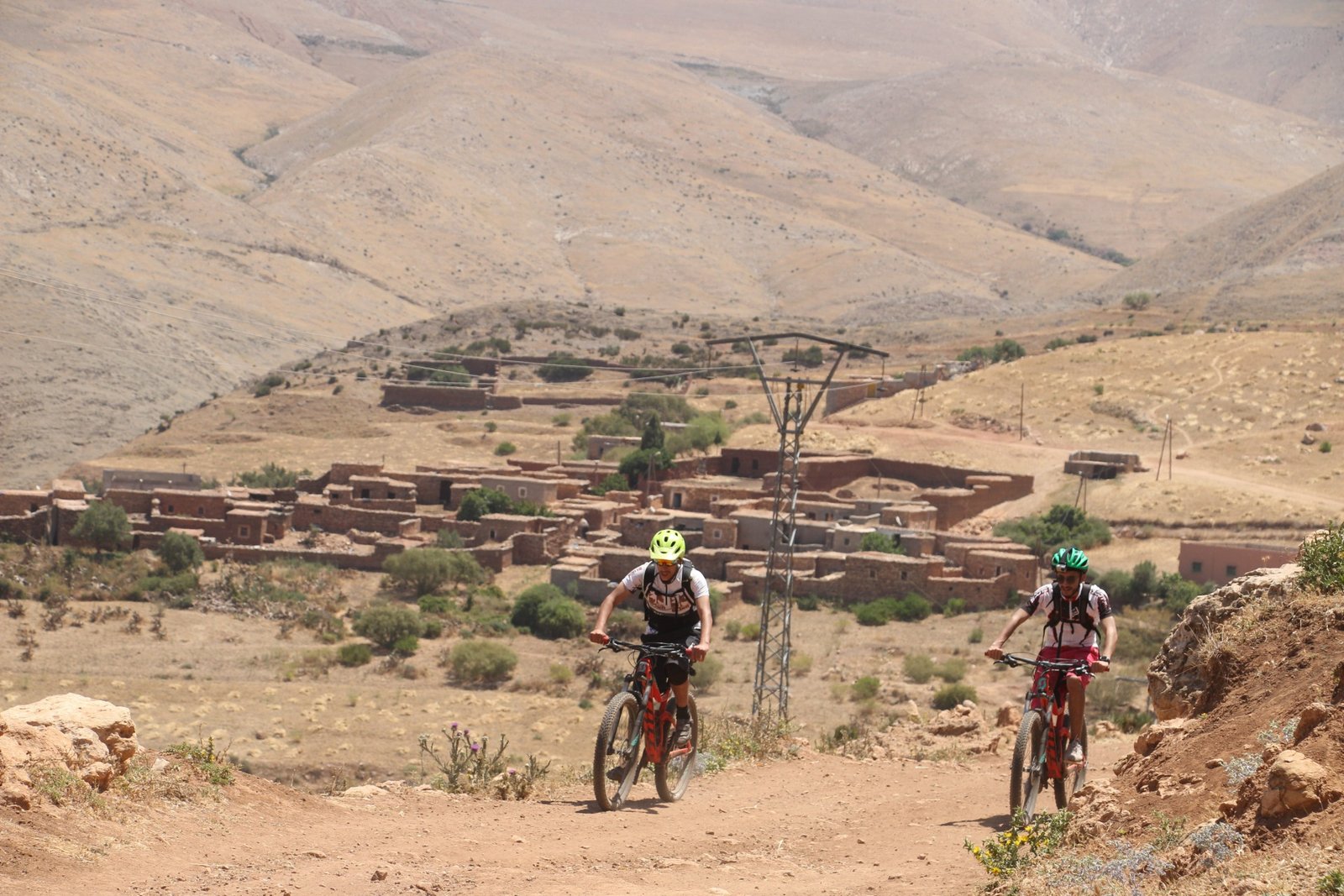
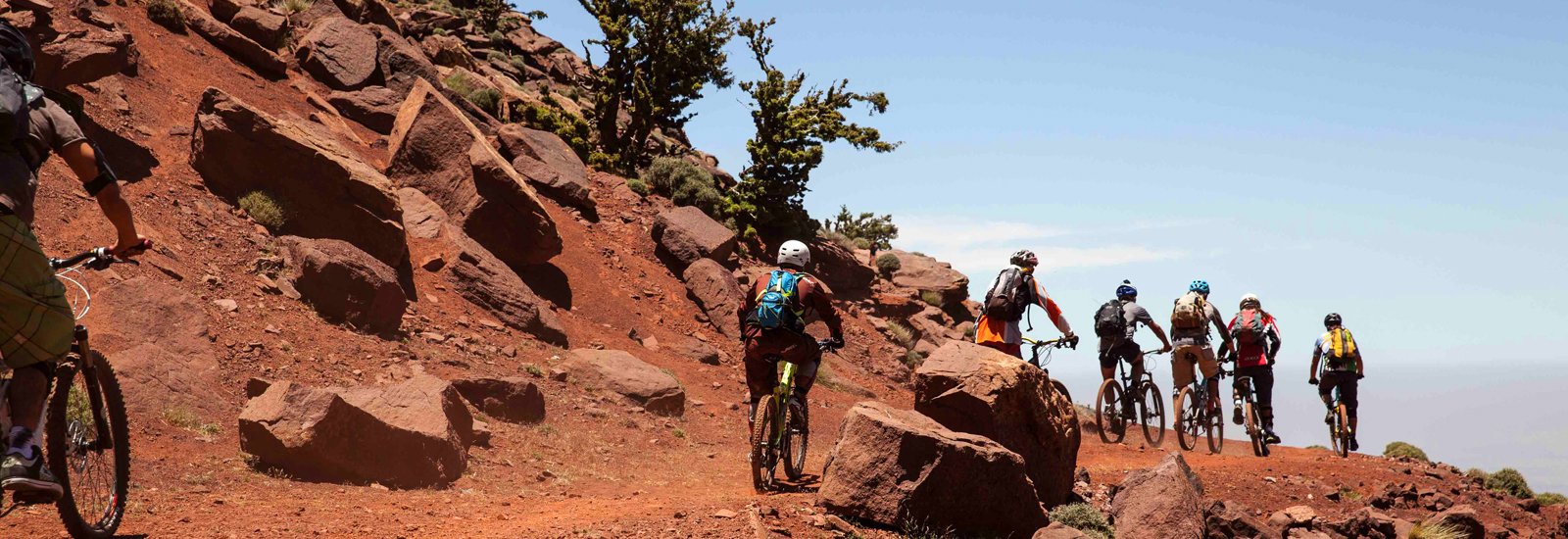
Depending on the destination and itinerary, riding may include mountain roads, rural tracks, compact dirt, rocky paths and sections of paved road. Conditions can change with altitude, weather and recent rainfall. Ask for a description of the proposed surfaces and technical difficulty rather than assuming that every e-bike tour follows the same type of trail.
When is the best time for an e-bike holiday in Morocco?+
Spring and autumn are often suitable periods for many lower and mid-altitude routes, but conditions vary by region and elevation. Higher mountain areas can be cold or affected by snow, while lower terrain can become very hot in summer. Southern and desert routes have their own seasonal considerations. Check the expected conditions for your intended route and travel dates before confirming your trip.
What should I wear and bring on an e-bike tour?+
Wear comfortable cycling clothing suitable for the season and terrain. A properly fitting helmet, gloves, sunglasses, sun protection and enough water are important. Mountain weather can change quickly, so a lightweight windproof or warm layer may also be useful. For a multi-day trip, ask for a packing list based on the confirmed itinerary and check which equipment is supplied by the organiser.
Can I bring my own electric mountain bike?+
You can discuss travelling with your own E-MTB when making an enquiry. Airline battery policies, transport arrangements, charging requirements and the bike's condition all need consideration. Provide your bike model, battery specifications and dimensions so the practical arrangements can be reviewed before travel. Do not assume that an airline will accept an e-bike battery without checking its current rules.
Can I arrange a private e-bike tour?+
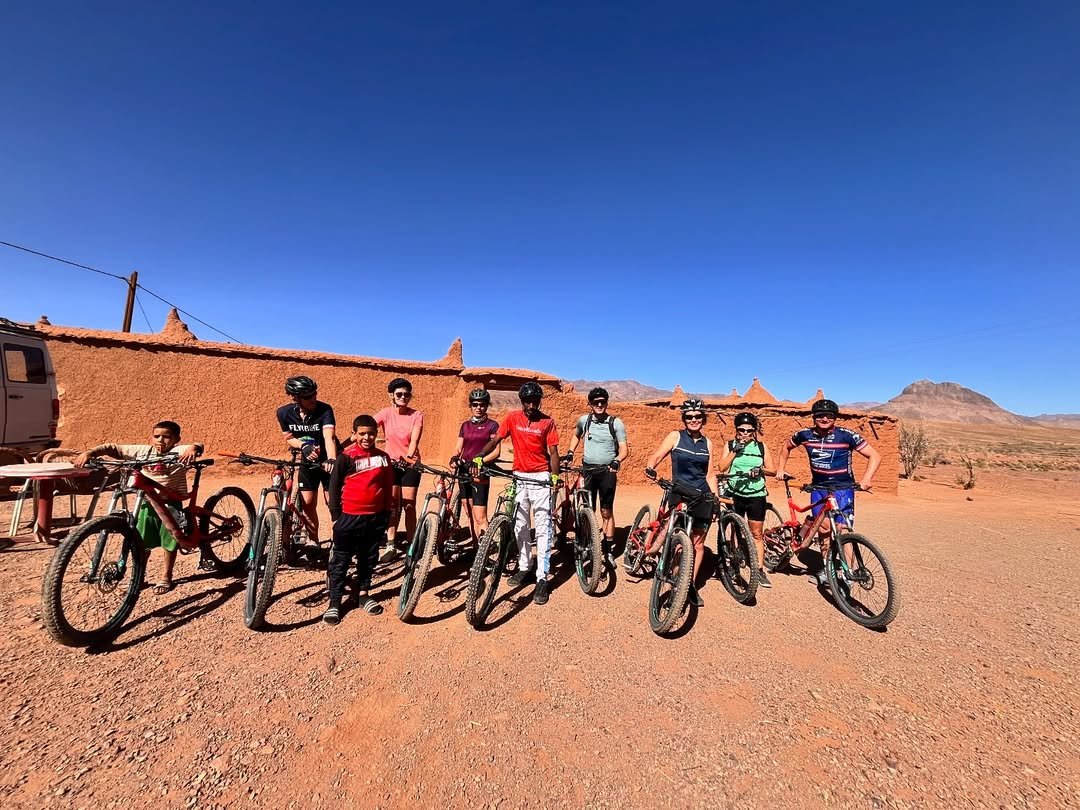
You can enquire about a private trip for friends, couples or a group travelling together. Share your travel dates, number of riders, experience levels, preferred regions, bike requirements and accommodation preferences. This information helps establish which route options and practical arrangements may be suitable for your group.
What should I check before booking an e-bike tour?+
Ask for the proposed daily distances, elevation gain, terrain description and technical difficulty. Confirm the type of electric bike, frame sizes, battery capacity, charging arrangements and mechanical support. It is also useful to understand what is included in the price, how transfers and accommodation are arranged, what meals are provided and what happens if weather or route conditions require a change.

 E-BIKE DAY RIDES · MARRAKECHMARRAKECH & ATLAS FOOTHILLS