E-bike cycling is not one single activity. A powerful electric mountain bike can help riders manage sustained climbs on rough tracks, while a trekking or road e-bike is better suited to smoother surfaces and a different style of journey. In Morocco, where a trip can cross major changes in elevation, terrain and remoteness, the bike category, route and support plan should be considered together rather than separately.
Why choose an e-bike for cycling in Morocco?
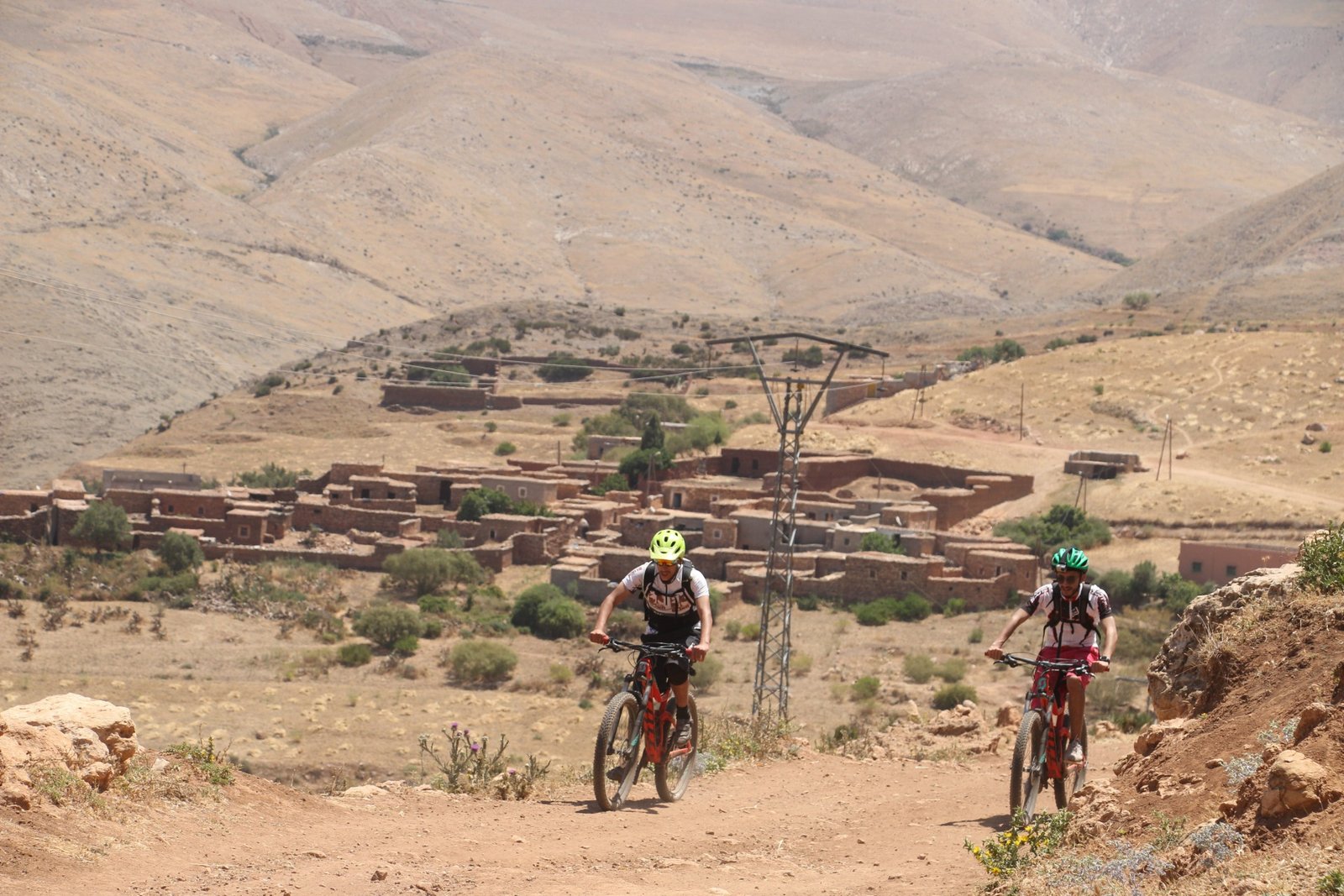
Morocco's landscapes create rides with very different physical demands. Atlas foothills can lead into long climbs, village tracks and rocky trails; the outskirts of Marrakech offer a mix of rural roads and open terrain; and longer southern journeys may involve exposed sections with fewer places to resupply. Pedal assistance can help some riders manage climbing or maintain energy across a longer day, but it does not make every route easy or remove the need for technical bike control.
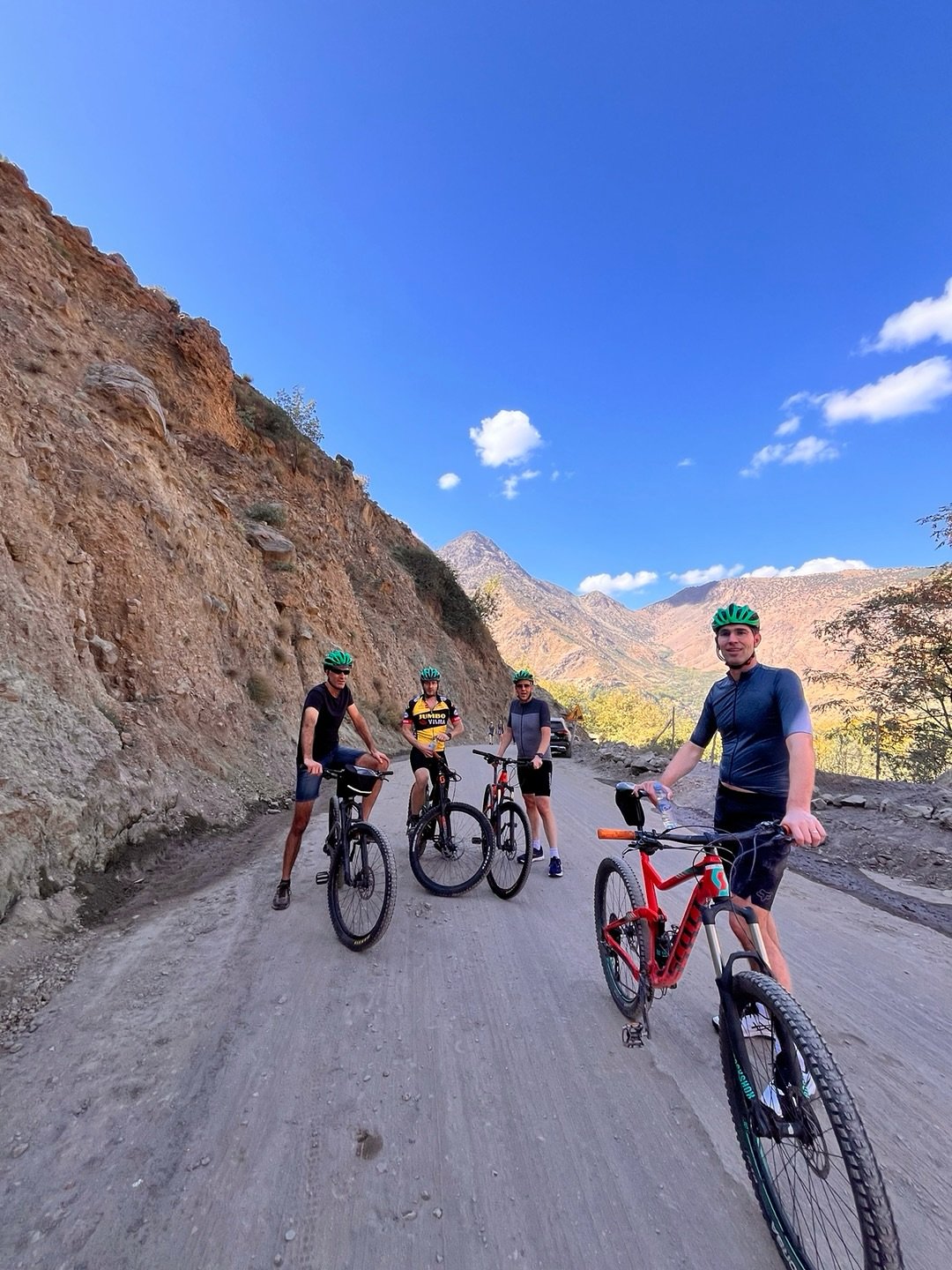
An e-bike may also make it easier for riders with different fitness levels to share a suitable itinerary. The details still matter: a rider on high assistance may use more battery, while an experienced rider on a non-electric bike may travel at a different pace. The best route leaves enough time for regrouping, stops and enjoyment rather than treating assistance as a reason to keep adding distance.
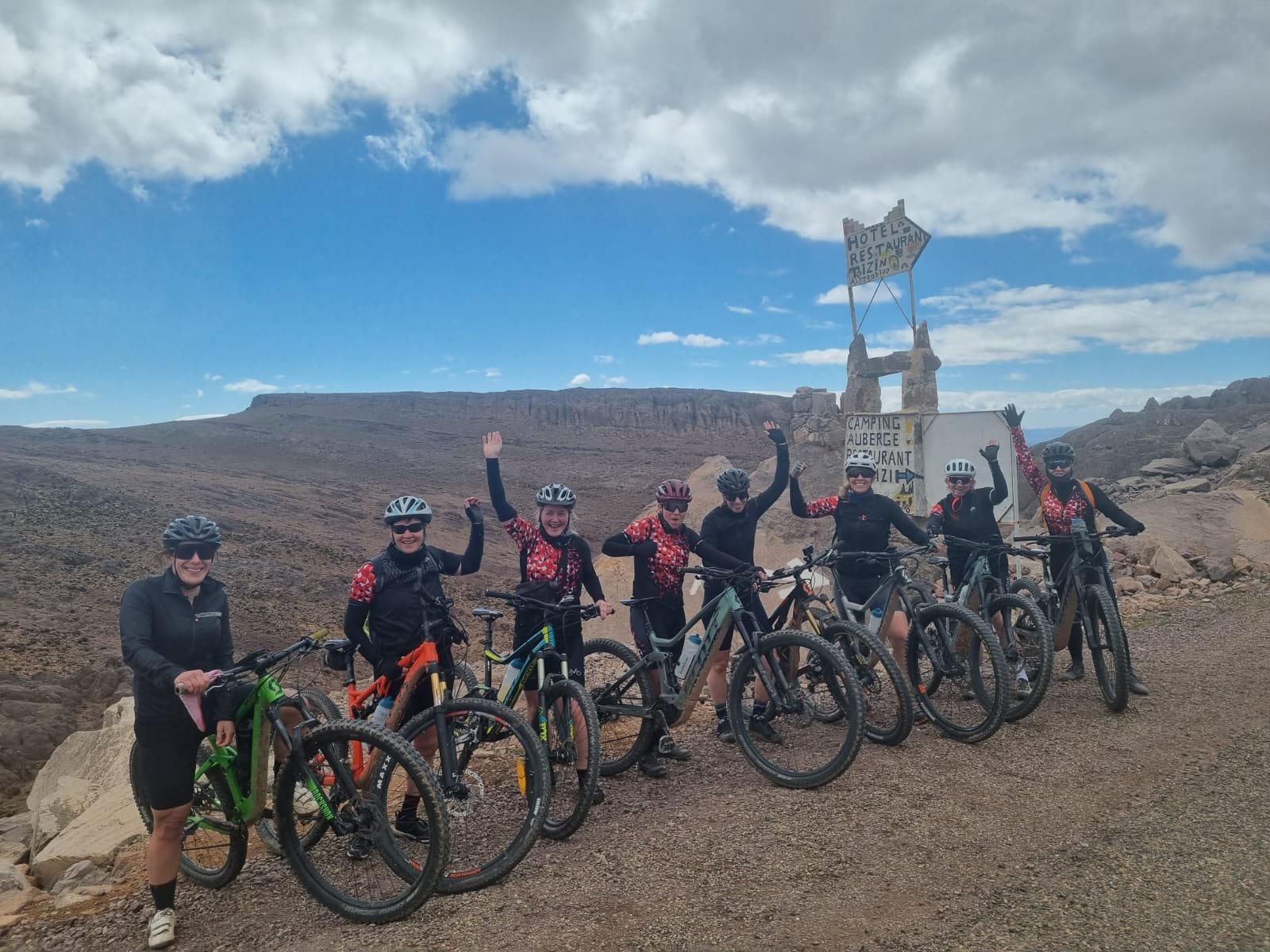
Decide whether your priority is mountain trail riding, a scenic tour on smoother roads, helping a mixed-ability group ride together, or covering a longer distance. Those goals determine which e-bike format and route should be discussed.
Choose the right type of e-bike
Electric mountain bike (E-MTB)
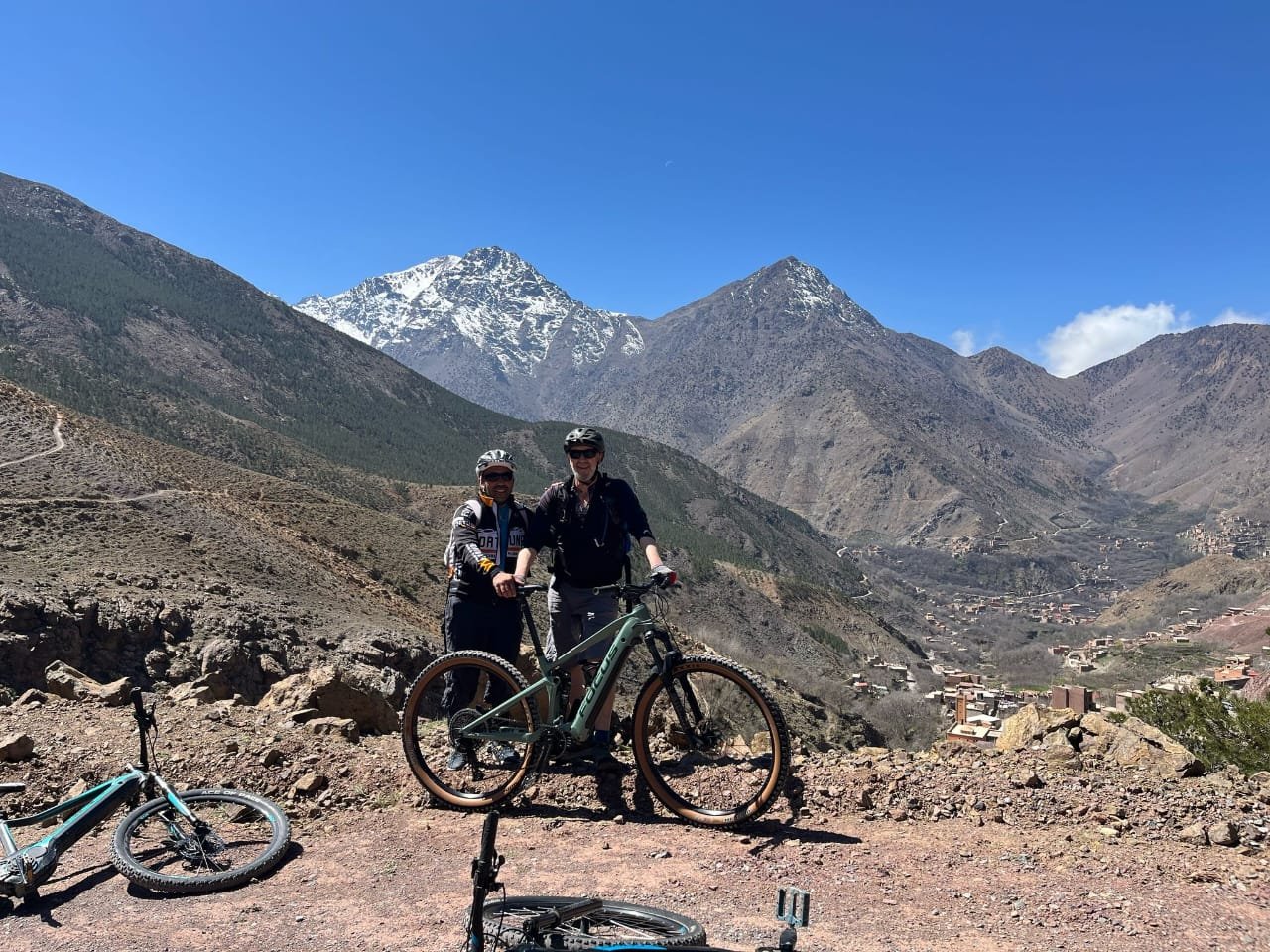
An E-MTB is designed for off-road riding, with a frame geometry, tyres, brakes and often suspension intended for dirt tracks and more challenging terrain. It may suit selected Atlas routes, foothill trails and some rocky desert tracks, depending on the route difficulty and the bike's design. A technical trail still requires balance, line choice, controlled braking and confidence over loose surfaces.
Trekking and hybrid e-bikes
A trekking or hybrid e-bike is generally intended for smoother paths, paved roads and easier mixed-surface journeys. It may be appropriate for riders who want scenic travel rather than technical singletrack. Confirm the tyre width, braking system, luggage capacity and permitted surface with the organiser; a bike that is comfortable on asphalt may not be suitable for rough, steep or rocky trails.
Road e-bikes
Road e-bikes are built around paved surfaces and road riding positions. They can suit riders who want assistance on climbs while keeping a road-cycling itinerary, but the gearing, tyres, battery capacity and overall range should be suitable for the planned elevation. If a route includes gravel or unpaved shortcuts, ask whether those sections are appropriate for the specific model.
Before booking, confirm the bike model or category, frame size availability, suspension, tyre type, brakes, battery, charger and whether the route's surface is suitable for that setup.
Battery range and daily route planning
Battery range is affected by several factors, so a manufacturer's headline figure is not a reliable promise for a full day in the mountains. Long climbs, rough surfaces, frequent acceleration, high assistance, heavier loads and cooler temperatures can increase energy use. Rider weight, tyre pressure, battery age, maintenance and riding style also affect the distance possible between charges.
Ask for an estimate based on the actual route, including total ascent, surface, expected duration and the assistance mode likely to be used. A sensible plan includes a reserve rather than assuming every rider will finish with a nearly empty battery. If there are alternative routes, the guide should explain how they affect distance, climbing and charging needs.
Distance is only one part of the calculation
A short route with sustained climbing may use more power than a longer ride on easier terrain. Consider elevation gain, time spent climbing, technical sections, temperature and opportunities to stop. It is also useful to know whether the group will have a support vehicle, spare battery arrangements where available, or a plan for a mechanical problem that affects the motor or battery system.
- Request the route distance and approximate climbing for each stage.
- Ask for a conservative range estimate based on the actual terrain and load.
- Confirm how assistance modes, stops and reserve power are expected to be managed.
- Understand the alternative plan if the battery level drops faster than expected.
Charging and multi-day e-bike logistics
Charging needs to be planned before a multi-day trip, especially when routes pass through remote valleys or exposed terrain. Do not assume that every accommodation has a suitable outlet, that a charger will be compatible with every battery, or that a second battery will be available. Ask where charging happens at the end of each stage and who is responsible for carrying and safeguarding chargers and batteries.
Questions to settle before travel
Confirm whether a charger is supplied, whether accommodation has reliable access to electricity, how long a full charge usually takes for the actual setup and whether the timetable gives enough time overnight. For longer journeys, clarify how luggage and batteries are transported, what happens if a charging stop is unavailable and whether the route can be shortened or altered without leaving the group unsupported.
Batteries should be handled and charged according to the manufacturer's instructions. Keep equipment dry and protected, and tell the support team if a battery or charger appears damaged, overheated or otherwise abnormal. Do not improvise electrical repairs in the field; follow the supplier's safety guidance and the tour team's plan.
Confirm charging locations and backup options in advance. The route should remain realistic if conditions, battery performance or the pace of the group differ from the estimate.
Terrain, riding skills and handling
An e-bike's motor helps with pedalling, but the extra weight and power change how the bike feels. Riders still need to judge braking distance, manage loose surfaces, pick a suitable line and control speed on descents. In technical mountain terrain, assistance may help a climb while making precise handling, traction and balance just as important as they are on a conventional mountain bike.
Climbing and descending
Choose an assistance mode that gives predictable power rather than a sudden surge, and practise starts on a safe, gradual slope before attempting a narrow or rocky climb. On descents, focus on body position, appropriate speed and smooth braking. Extra weight can influence cornering and stopping, so keep enough distance from other riders and follow the guide's instructions.
Walk sections when appropriate
Some tracks include steep steps, very loose rock, narrow traverses or surfaces where traction is poor. Dismounting can be the sensible choice for a short section, even for experienced riders. A route should be selected around the least confident rider in the group and current conditions, not around the highest assistance setting available.
Where to ride an e-bike in Morocco
High Atlas Mountains
The Atlas offers a range of paved climbs, village tracks and off-road routes. E-MTBs may suit some rough trails, while trekking or road e-bikes should be matched to suitable surfaces. Altitude, weather, trail access and the route's technical demands can change the experience significantly, so discuss the actual valleys, daily climbing and backup options.
Explore Atlas Mountains destinations ↗ Read the Atlas E-bike guide ↗
Marrakech and nearby foothills
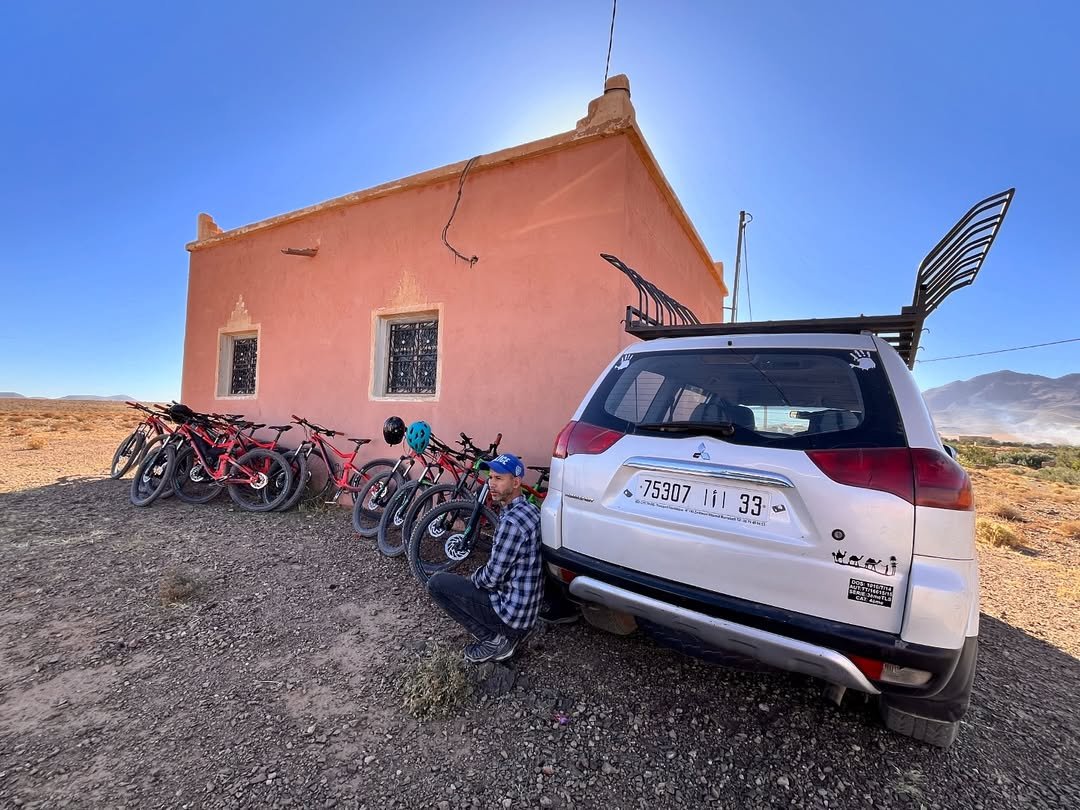
Marrakech can be a practical starting point for a day ride or a longer journey towards the mountains. Route plans should consider how riders leave the city, transfer times, the mix of paved and unpaved surfaces, and water access. If the itinerary begins with a transfer, confirm how the bikes are carried and where the ride starts.
Explore Marrakech ↗ Browse rides from Marrakech ↗
Agafay and open rocky terrain
Agafay's dry, open landscapes offer a different setting from high mountain routes. Surface, loose rock, temperature and exposure should shape the bike choice and daily timing. Carry adequate water, follow the agreed route and avoid adding remote loops without confirming the battery plan and support access.
Southern Morocco and desert itineraries
Longer southern journeys can involve exposed sections, long gaps between services and limited charging opportunities. An e-bike itinerary needs a particularly clear plan for range, overnight charging, water, repairs and vehicle access. Confirm whether the proposed bike and battery arrangements are designed for the terrain and remoteness involved.
Riding with mixed groups and different fitness levels
E-bikes can make a shared route more accessible for some groups, but they do not automatically make riders equal in speed, confidence or range. Technical ability on descents, experience on loose surfaces and the willingness to manage battery use still vary. An itinerary should consider the pace of the whole group and include agreed regrouping points, breaks and clear communication.
If some riders use conventional bikes and others e-bikes, discuss how the route will be paced, whether stages are suitable for both groups and where everyone can safely wait. Avoid turning the ride into a race or assuming that assistance means the day should be longer. A balanced itinerary leaves time to enjoy the journey as well as finish it.
Bike setup, clothing and equipment
The right setup depends on the bike format, route surface and conditions. Confirm frame sizes, adjustment options, suspension, tyre type, brakes, pedals, bottle capacity, battery and charger. If you bring your own e-bike, ask about transport, battery handling, charger compatibility and whether the support vehicle can accommodate the bike safely. For rental equipment, allow time for a fit check and short test ride before the first major stage.
What to bring
- A correctly fitted helmet, gloves, eye protection and clothing suitable for the planned terrain.
- Comfortable cycling shoes and layers for cool starts, altitude or changing weather.
- Enough bottle capacity and sun protection for exposed stages.
- Personal essentials and medication, plus any small repair items the organiser asks you to carry.
- Chargers and compatible accessories if travelling with your own bike, as agreed with the tour team.
- A small bag for off-bike clothing and any items needed after the ride.
Before each stage, check tyre condition, brakes, shifting, battery mounting and battery level. Confirm who carries tools and which tasks riders should not attempt themselves. Any unusual motor or battery behaviour should be raised with the guide or technician before continuing.
Safety, mechanical support and route changes
A good e-bike tour plan covers the ordinary problems as well as more serious interruptions. Ask how punctures, brake issues, motor faults, battery problems or rider fatigue will be handled. Find out where the support vehicle can reach the route, how the group communicates if separated and what happens if conditions require a change of plan. In remote areas, the availability of help can depend on access and distance.
E-bike systems are more complex than conventional bikes. Do not attempt electrical repairs unless you are qualified and the manufacturer permits the work. Keep batteries and connectors protected from impacts and moisture, use the correct charger and follow instructions for charging, transport and storage. Tell the guide immediately if there is damage, unusual heat, smoke, a burning smell or unexpected battery behaviour.
Ask what equipment, spare parts, transport and communication methods are included for the route. Confirm the plan for an e-bike fault before setting off, particularly on long stages or remote journeys.
Plan an e-bike holiday that fits your goals
Start by sharing your preferred dates, group size, usual riding experience, preferred terrain and the daily effort you want. Explain whether you are looking for an E-MTB trail trip, smoother scenic touring, a day ride from Marrakech or a multi-day route. If your group has mixed abilities or some riders are new to e-bikes, mention this at the beginning so the route can be discussed realistically.
Request a proposed stage-by-stage plan showing distance, climbing, expected riding time, surfaces, charging arrangements, overnight stops and support. Confirm bike availability, sizes, equipment, inclusions, exclusions, transfer and luggage arrangements, payment terms and cancellation conditions before booking. Specific services and availability need to be confirmed for your travel dates.
Questions to settle before booking
- Bike: exact category, size, fit, brakes, tyres, pedals and battery capacity.
- Route: daily distance, ascent, surface, technical features and backup options.
- Range: realistic battery estimate, reserve power and alternative plan.
- Charging: compatible chargers, overnight charging locations and time available.
- Support: vehicle access, mechanical help, luggage, water and communication.
- Inclusions: clearly stated guiding, equipment, accommodation, meals, transfers and additional costs.
Quick pre-trip checklist
- Confirm that the supplied e-bike is suitable for the planned surface and technical level.
- Check frame size, fit, tyre condition, brakes, battery and charger compatibility.
- Understand the expected range for each stage, including climbing and a power reserve.
- Know where charging happens and what the plan is if charging is unavailable.
- Confirm luggage transfers, support vehicle access, repairs and communication arrangements.
- Review the itinerary, current route conditions, inclusions and cancellation terms before final payment.
Frequently asked questions
What kind of e-bike is best for cycling in Morocco?
The right bike depends on the route. An E-MTB with suitable tyres, suspension and brakes is generally the more appropriate format for rough tracks and technical mountain trails. A trekking or road e-bike may suit smoother paved routes. Ask which exact model is supplied and what surfaces are planned before deciding.
How far can an e-bike travel on one charge?
There is no reliable distance figure for every ride. Battery use changes with elevation, terrain, assistance mode, rider and luggage weight, temperature, tyre pressure and battery condition. Ask the organiser for a conservative estimate based on the actual route, including ascent and expected support options.
Can I ride an e-bike in the Atlas Mountains?
E-MTB routes are possible in the Atlas region, but difficulty depends on the track, gradient, altitude, weather and riders' handling skills. Assistance helps with pedalling effort; it does not remove the demands of descending, braking or controlling a bike on loose terrain. Confirm the route and your ability level in advance.
Will I be able to charge the battery during a multi-day trip?
Charging access depends on the itinerary and overnight stops. Do not assume there will be a convenient socket or spare battery in remote locations. Ask where charging is planned, whether chargers are compatible with the supplied bikes, how batteries are stored and what the backup plan is if charging is not available.
Can a group of e-bike and non-electric riders travel together?
It may be possible, but the route and daily schedule should reflect the fitness, pace and skills of the whole group. The strongest rider or the largest battery range should not determine the plan on its own. Discuss group differences, stage length, regrouping points and charging needs before confirming.
What should I check before booking an e-bike tour?
Confirm the bike type and frame size, battery capacity and estimated range for the route, charging arrangements, pedals, helmet, equipment condition, mechanical support, luggage and transfer plan, and what is included in the price. Also ask what happens if a bike develops a fault or the planned route changes.