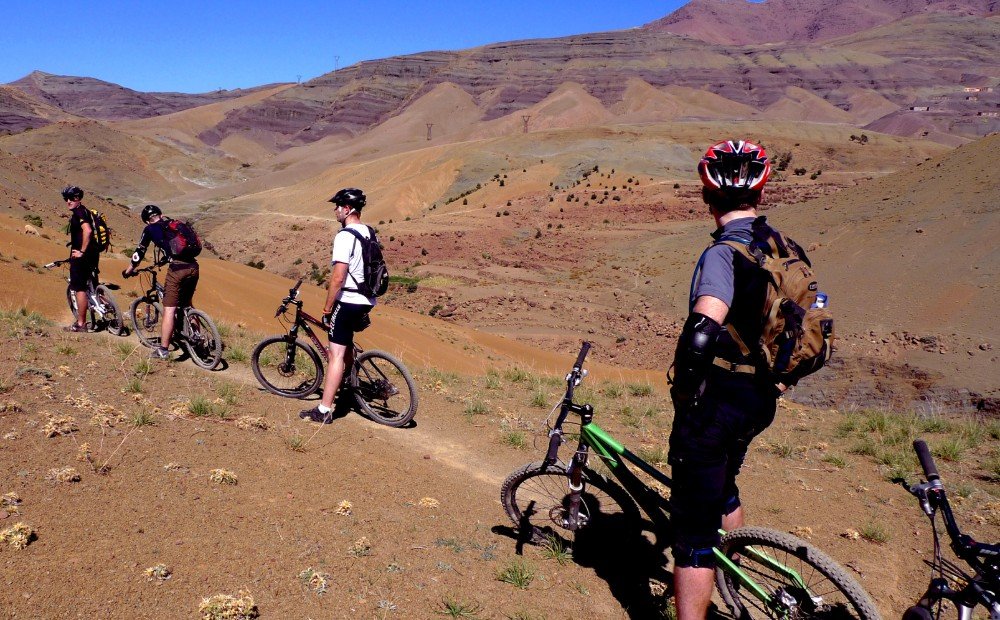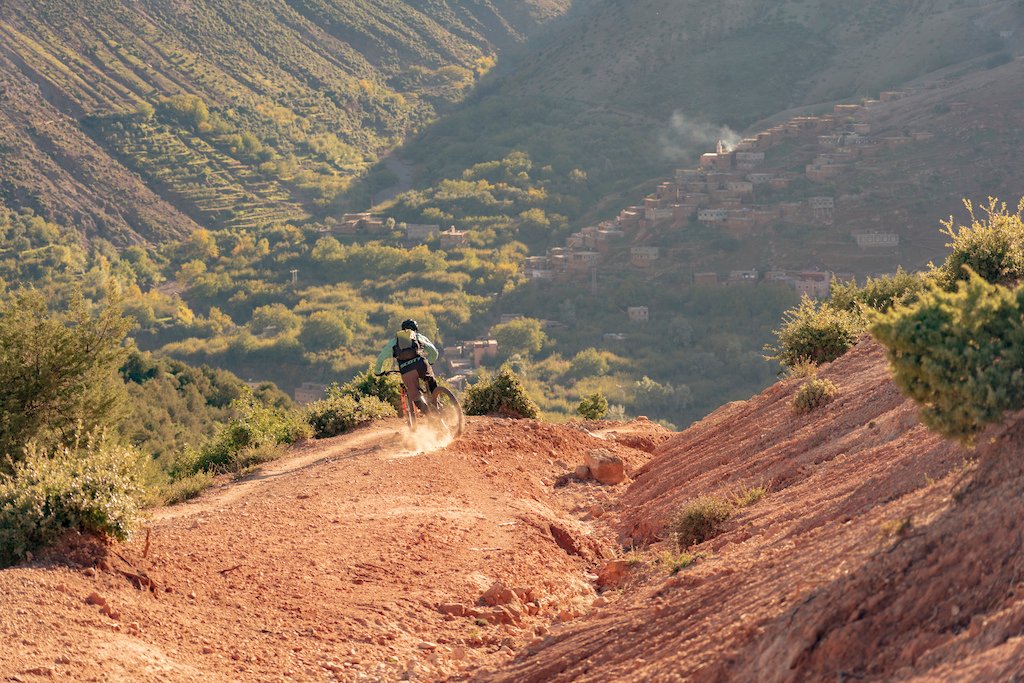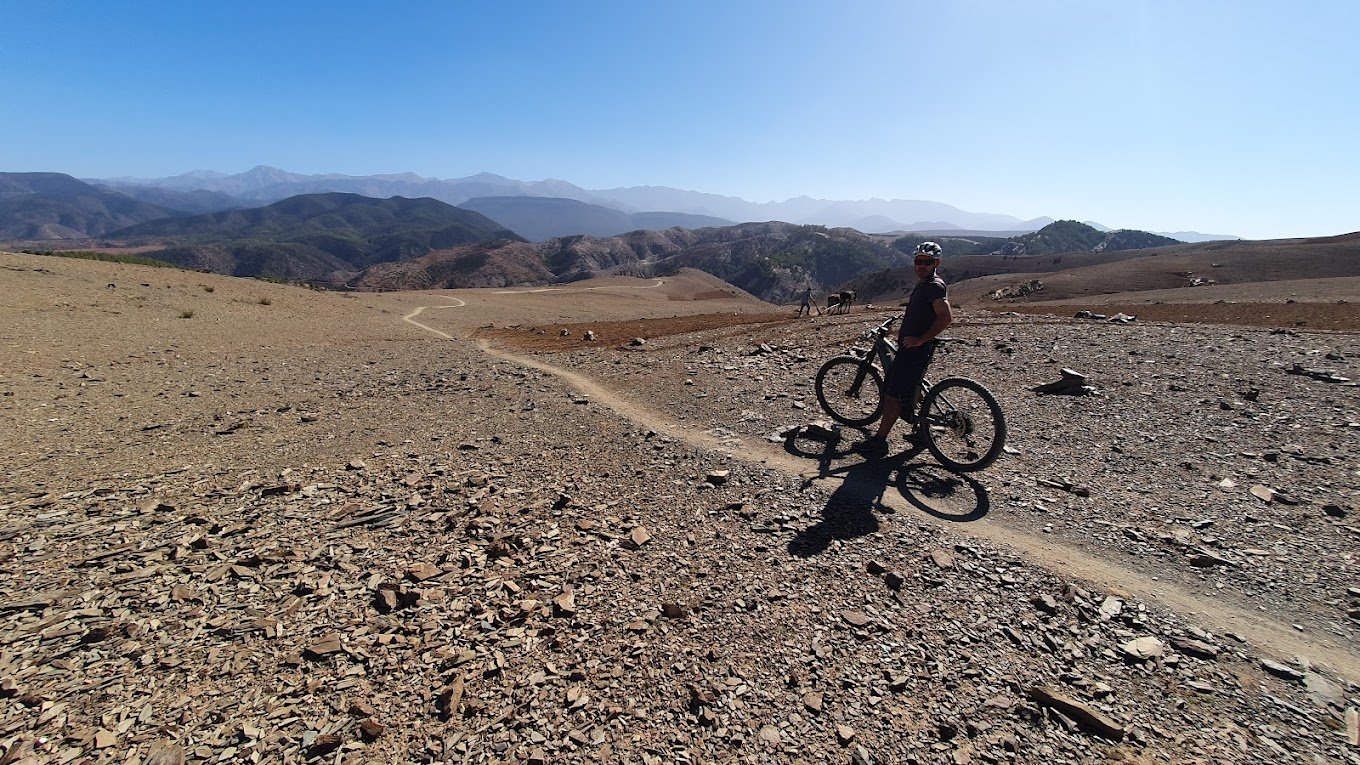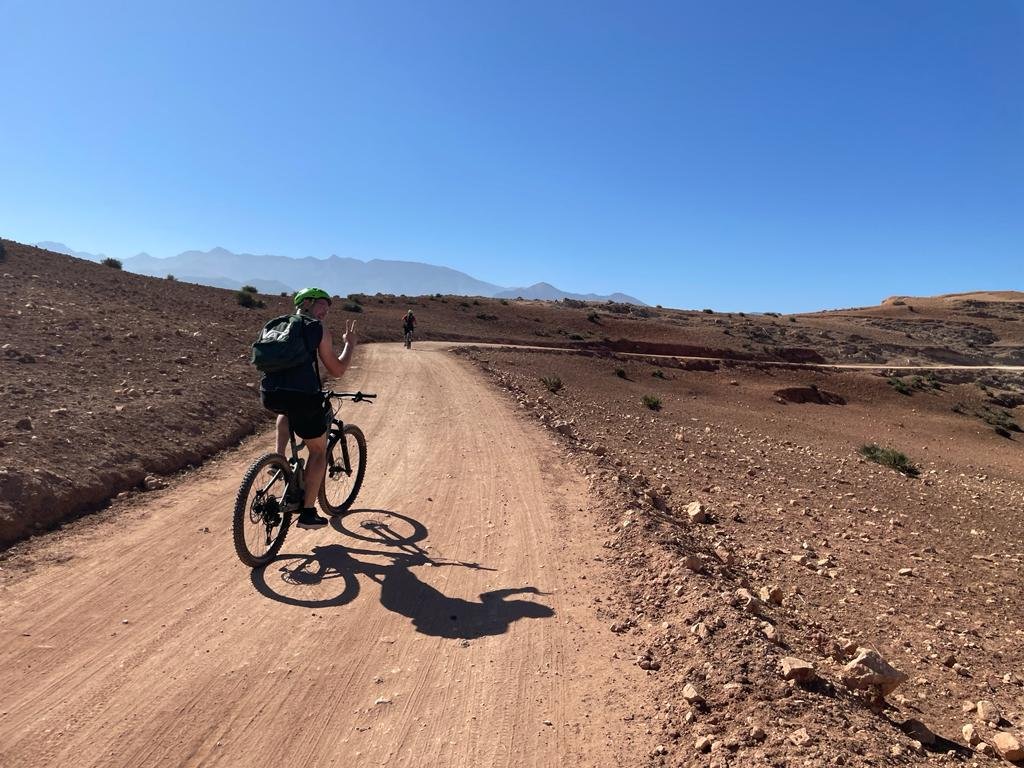
High Atlas singletrack is not one standard trail type. Routes can include compact dirt, loose stones, embedded rock, narrow hillside paths, old mule tracks and short technical steps. The character of a trail may vary within the same ride, so a useful plan describes the surfaces and features instead of relying on a general difficulty label.
What singletrack means in the High Atlas
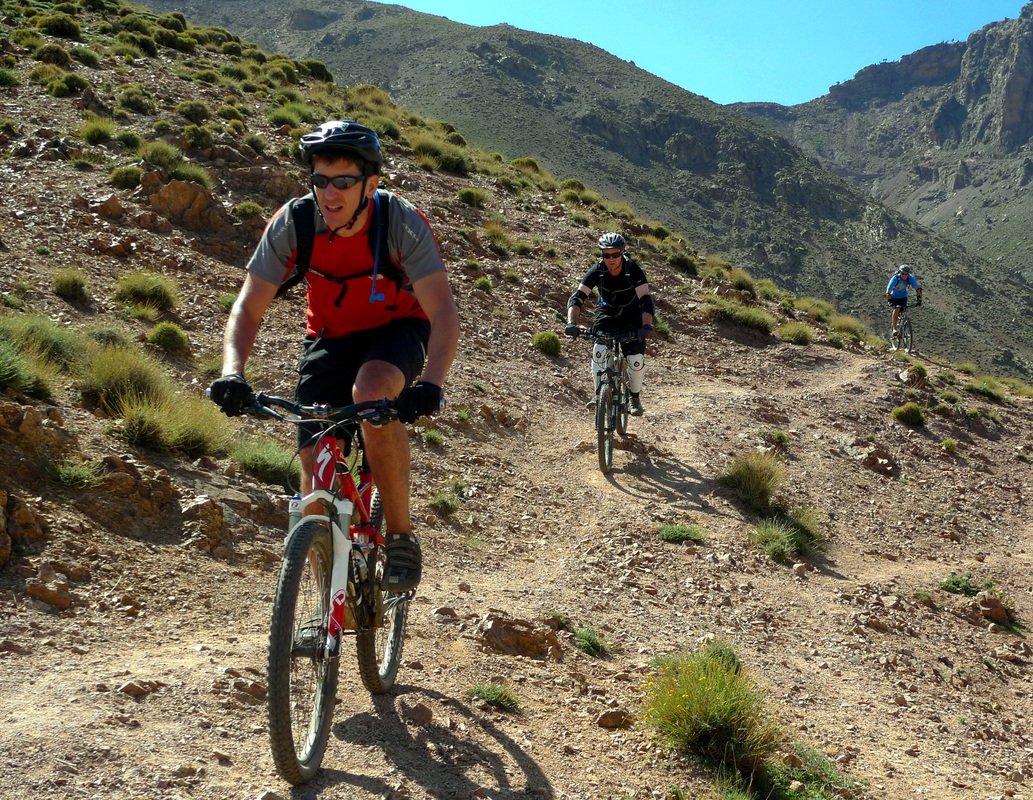
Singletrack describes a narrow path that is generally about the width of one bike. In the High Atlas, it may follow a contour across a hillside, descend towards a valley, connect settlements or thread through agricultural and mountain terrain. The route may feel smooth and flowing in one place and rough or technical a short distance later.
The trail can also be part of a working landscape. Walkers, local residents, livestock and pack animals may use some paths. Riders should be ready to slow down, give space and wait where necessary rather than treating every narrow section as a downhill track.
Learn to read the trail character
Flowing dirt and compact paths
Firmer dirt and gently curving trail can make it easier to maintain momentum, but dust, loose gravel or uneven edges can still affect traction. Look ahead, keep a relaxed grip and leave enough space to react when the path bends or the surface changes.
Rocky and uneven sections
Embedded stones, loose rock and small steps require controlled speed and careful line choice. Check that the route suits your skills and bike, and do not feel obliged to ride every feature. Walking a short section can be the sensible option when traction, exposure or visibility is uncertain.
Hillside traverses and narrow paths
On narrow trails, there may be little room to pass or stop safely. Stay aware of the edge, avoid sudden direction changes and dismount when a feature exceeds your comfort. Ask about exposed sections before the ride so expectations are clear in advance.
Ask for the route surface, narrow or exposed sections, steepest features and any hike-a-bike stretches. “Singletrack” alone is not a technical difficulty rating.
Technical features to ask about
Technical difficulty can come from several factors working together: loose ground, steep gradients, tight turns, drops or steps, poor visibility, exposure and fatigue late in the ride. A short section can feel challenging even when the overall ride is not especially long. Clarify which features are continuous and which are isolated so you can judge whether the route is appropriate.
If you ride with a guide, ask how the group will approach a difficult feature and where riders can regroup. A good briefing explains the line, hazards and alternatives without pressuring anyone to ride beyond their ability. For further detail, read our technical trails guide.
Choose a suitable bike and setup
A capable mountain bike is usually the most versatile choice for rough High Atlas singletrack. Reliable brakes, tyres suited to the surface, appropriate gearing and a well-maintained drivetrain matter more than a label on the frame. Suspension can improve comfort and control on rough ground, but the best setup depends on your route, ability and preferences.
If you are hiring a bike, confirm the frame size, fit, pedals, helmet availability, tyre condition and what spares are included. E-MTB riders should also discuss battery range, charging options, bike weight on technical terrain and how the itinerary will accommodate the whole group. Check brake pads, tyre pressure, wheels and drivetrain before setting off.
- Tyres: Choose suitable tread and pressure for the surface, rider weight and conditions.
- Brakes: Confirm consistent braking and adequate pad condition for sustained descents.
- Fit: Set saddle, controls and suspension to the rider before the first technical section.
- Repair kit: Carry the essentials for your bike and know what support is available.
Skills that make singletrack more enjoyable
Good mountain riding starts with looking ahead, managing speed before a turn and using both brakes progressively. A neutral stance, relaxed arms and light hands help the bike move beneath you on uneven ground. On climbs, choose a gear that allows smooth pedalling and keep traction in mind rather than trying to force every steep section.
Practice basic balance, controlled braking and cornering on terrain that is comfortably within your ability before attempting more technical trails. Fatigue affects judgement and coordination, so take breaks, drink regularly and tell your guide when the pace or trail difficulty feels too demanding. A successful ride is one where you finish with energy and confidence, not only one with the most difficult features completed.
Plan distance, climbing and logistics together
Distance alone does not predict how long a singletrack route will take. A short stage with repeated climbs, loose rock or technical descents can demand more time than a longer ride on smooth tracks. Ask for an estimate of ascent, descent, expected riding time, transfers and likely stopping points, then check whether the schedule leaves room for breaks and unexpected delays.
On remote or multi-day routes, discuss water and food availability, luggage handling, accommodation, communication and mechanical support. Make sure the route plan includes a sensible response to changing weather, injury or a bike problem. For wider route options, see The Best MTB Trails in the Atlas Mountains and the High Atlas techniques and training guide.
Weather and seasonal conditions
Conditions vary with altitude, aspect and recent weather. Higher sections can be cold, wet or snow-affected at times, while lower and exposed trails may be hot and dusty in summer. Rain can change traction and the safety of certain paths, and wind or cloud may affect comfort and visibility. Check conditions close to departure and rely on local guidance for route access.
Pack layers that match the elevation and forecast, plus sun protection and enough water for the planned route. If your itinerary includes multiple valleys or a higher pass, leave flexibility to change the sequence or choose an alternative trail if conditions require it.
Respect the trail and the people who use it
Keep speed low near houses and villages, yield to walkers and animals, and stop where there is enough room for others to pass. Avoid cutting corners or creating new lines that erode the hillside. Ask before photographing people, take rubbish with you and follow the route agreed with your guide. These simple habits help maintain access and show respect for communities whose paths are part of everyday life.
Pre-ride singletrack checklist
- Confirm route surface, technical grade, exposure, distance and ascent.
- Check bike fit, brakes, tyres, drivetrain and suspension if fitted.
- Carry water, snacks, sun protection, layers and personal repair essentials.
- Understand guide, communication, transfer and mechanical-support arrangements.
- Review the forecast and agree on alternatives if trail conditions change.
- Be prepared to walk a section if it is beyond your ability or unsafe to ride.
Frequently asked questions
What is High Atlas singletrack like?
It varies by location and route. You may encounter narrow dirt paths, rocky sections, hillside traverses, old village tracks and rougher technical features. Ask for a route-specific description rather than assuming every singletrack section has the same surface or difficulty.
Is High Atlas singletrack suitable for beginners?
Some routes may suit riders with basic bike control and confidence on uneven ground, but narrow, steep, loose or exposed trail sections can require more experience. Choose routes based on actual riding ability and discuss alternatives for any feature that feels beyond your comfort level.
Which bike works best for singletrack?
A mountain bike with suitable tyres, reliable brakes and gearing for the climbs is often the most versatile choice for rough singletrack. Suspension and tyre width should match the terrain and rider preferences. Confirm the proposed surfaces before choosing or hiring a bike.
How should I judge trail difficulty?
Consider surface, steepness, width, exposure, obstacles, climbing and how sustained the technical sections are. Ask about hike-a-bike stretches and whether there is room to stop safely. Distance alone is not a reliable measure of how challenging a route will feel.
When is the best time for singletrack in the High Atlas?
Conditions depend on altitude, aspect and recent weather. Spring and autumn are often considered for many lower and mid-altitude rides, but high routes can be cold, wet or snow-affected, while exposed lower terrain can be very hot in summer. Check current local conditions for your exact route and dates.
What should I carry on a singletrack ride?
Carry a correctly fitted helmet, gloves, eyewear, water, snacks, sun protection and layers suitable for the forecast. Take basic personal repair essentials and a charged phone or navigation device. Confirm which tools, spares, guide support and emergency arrangements are provided for your route.