There is no single definition of a women’s cycling holiday. Some groups want technical singletrack and full riding days; others prefer scenic trails, steady climbing, time to practise skills or a balance between riding and cultural discovery. Start with the people in the group, then choose the route and support around them.
Why choose a women-focused mountain biking trip?
Riding with a group of women can create space to share goals, learn from each other and celebrate progress, whether that means completing a long climb, trying a new trail feature or simply spending several days outdoors together. Some riders value skills development; others want a memorable holiday where cycling is the main focus but not the only activity. Defining what a good trip looks like to the group helps the organiser make better choices.
The label alone does not guarantee that a trip will suit everyone. Ask about the planned terrain, the expected pace, group size, guiding approach, accommodation and support. The aim is not to lower expectations or assume all women ride alike; it is to make the trip responsive to the riders who are actually taking part.
Before enquiring, discuss the balance you want between challenging riding, confidence-building, sightseeing, rest time and cultural experiences. You do not need identical ability levels, but you do need an honest conversation about the terrain each rider is ready to handle.
Choose the right route, difficulty and pace
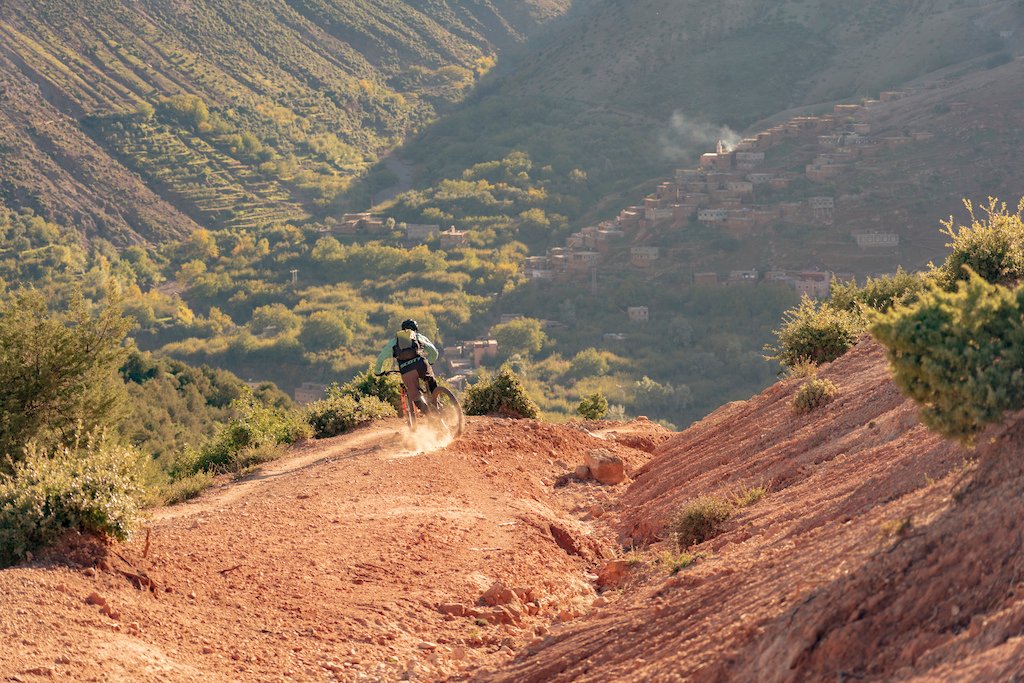
Morocco offers a broad range of riding environments. High Atlas routes may include stony tracks, narrow paths, long climbs and technical descents; foothills near Marrakech can offer shorter outings; gravel itineraries may link rural roads and rougher tracks; and E-MTB can make some climbs more manageable while still requiring confident bike control. The best fit depends on current ability, fitness, preferred terrain and how much riding the group wants to do each day.
Ask for more than a difficulty grade
Request stage-by-stage information about distance, ascent, surface, steepness, exposure, expected ride time and any hike-a-bike sections. A broad label such as “moderate” can mean different things to different operators. If some riders are newer to mountain biking, ask whether the itinerary has options to shorten a stage, bypass a technical section or take extra time without leaving anyone unsupported.
Build in room for adjustments
Daily plans work best when there is time for breaks, water, photos and regrouping. Avoid treating every stage as a target that must be completed at one pace. Agree on clear regrouping points and make sure the guide understands the group’s priorities before the trip starts.
Share examples of trails you ride at home, the length of your usual rides and what technical features feel comfortable. This is more useful than describing yourself only as a beginner, intermediate or advanced rider.
Build confidence and keep the group experience positive
Confidence grows when riders are given clear information, time to make decisions and permission to progress at an individual pace. Before an unfamiliar section, a guide can explain the terrain, point out a possible line and help riders decide whether to ride, walk or take another option if one is available. No rider should feel pressured to attempt a feature to keep up appearances or avoid delaying the group.
Skills practice without pressure
If skills development is part of the goal, agree on that when planning. Useful areas to practise may include controlled braking, looking through turns, managing loose surfaces, choosing a line and changing gears before a climb becomes too steep. A suitable practice area and measured progression are better than trying a new technique at speed on an exposed trail.
Different abilities can share a trip
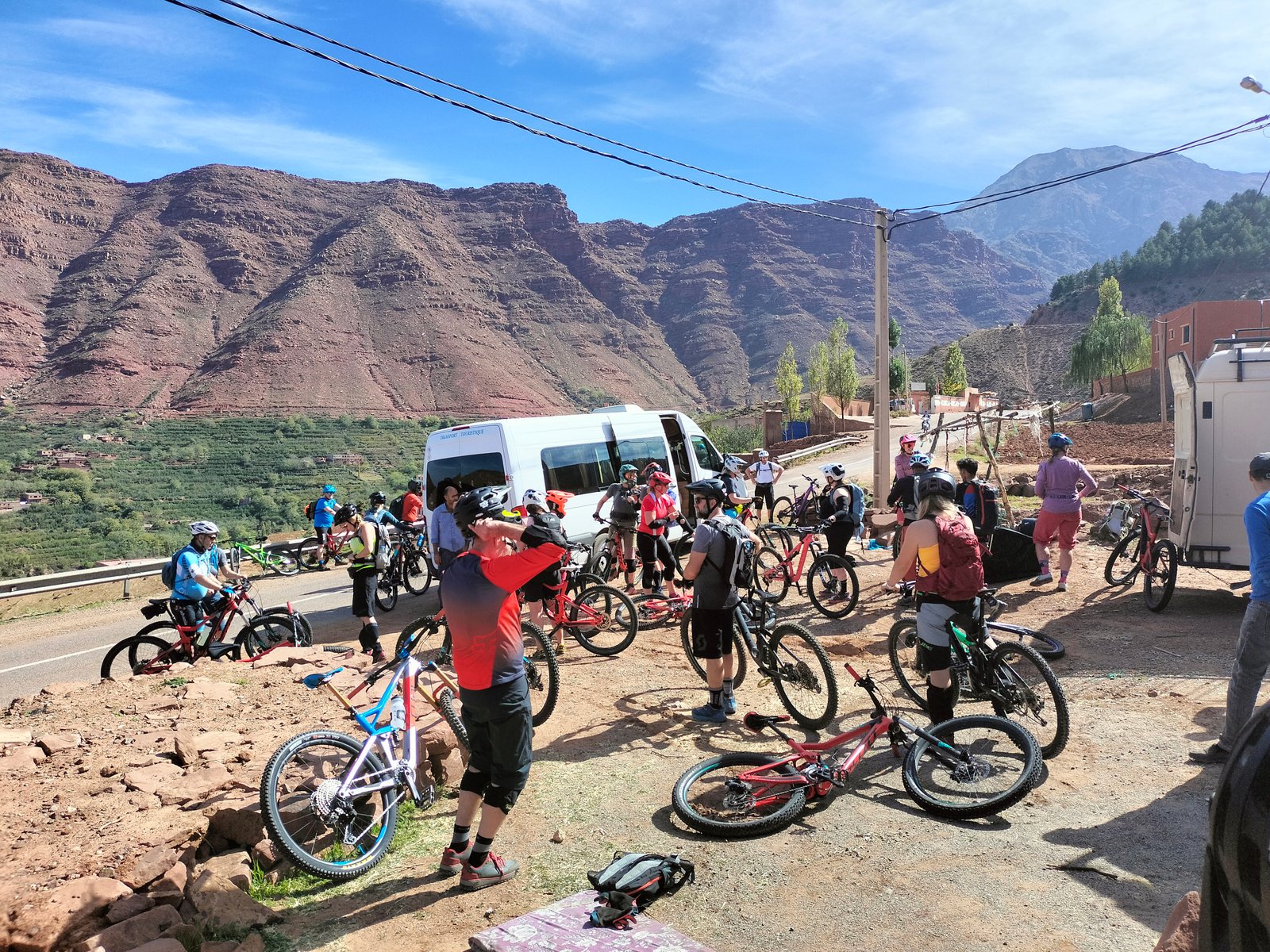
Mixed ability does not automatically prevent a good group holiday, but the route and logistics need to reflect it. Clarify how the group will regroup, whether support can assist if a rider needs a break, and how much flexibility is possible if someone finds a stage harder than expected. Agreeing these points in advance can reduce uncertainty once the group is on the trail.
Guides, safety and support on the trail
In remote or mountainous terrain, good planning matters as much as the route itself. Ask who will lead the ride, how routes are selected for the group, what communication is carried, how the support team handles a mechanical problem and what the plan is if weather or trail conditions change. Clarify whether a support vehicle is available for the proposed itinerary and which sections it can actually reach.
Safety should be discussed clearly and without overpromising. Ask about helmets, first-aid arrangements, emergency communication, expected group size and procedures if someone is injured or unable to continue. Riders should also share relevant experience, confidence levels and any needs that may affect the ride, so the organiser can discuss suitable options before confirming the trip.
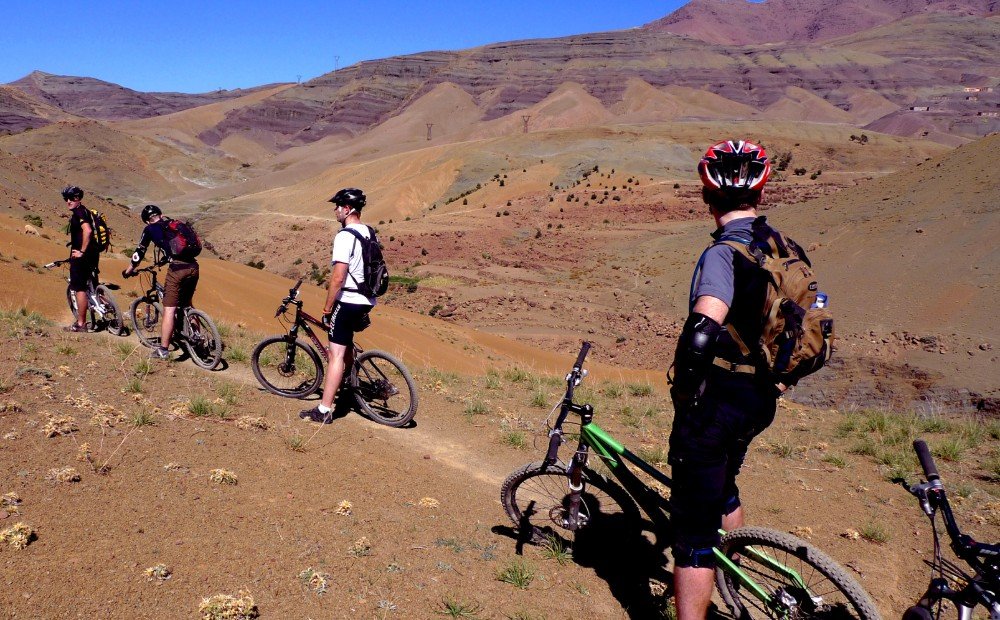
Ask what is included, what riders need to carry themselves, how assistance works on each stage and who to contact before departure. Support arrangements can vary by route, so do not assume every area is vehicle-accessible.
Bike fit, equipment and comfort
Bike fit can make a significant difference over several days. Provide each rider’s height and any particular fit needs ahead of time if bikes are being hired. Confirm the frame size, saddle adjustment, reach to the handlebars, brake-lever position, pedals, helmet availability and time for a test ride. If anyone has a familiar saddle, pedals or contact points that make riding more comfortable, ask whether bringing them is practical.
Check the bike before the first stage
Test brakes, gears, tyres, wheels and suspension where applicable, and make sure the bike feels controllable at low speed before heading onto a trail. Ask what spares and tools the guide carries, how punctures are handled and what happens if a bike cannot be repaired during the ride. On an E-MTB trip, clarify battery range, charging opportunities and how the itinerary accounts for different assistance use.
Pack for changing conditions
A basic kit usually includes a helmet, gloves, eye protection, suitable shoes, comfortable riding layers, sun protection and enough water capacity for the expected stage. Mountain mornings and higher elevations can be cooler than lower areas, so a light insulating layer and wind or rain shell may be useful depending on season and forecast. Keep personal medication and essential items accessible, and request a route-specific packing list before departure.
Where to ride in Morocco
High Atlas Mountains and Imlil
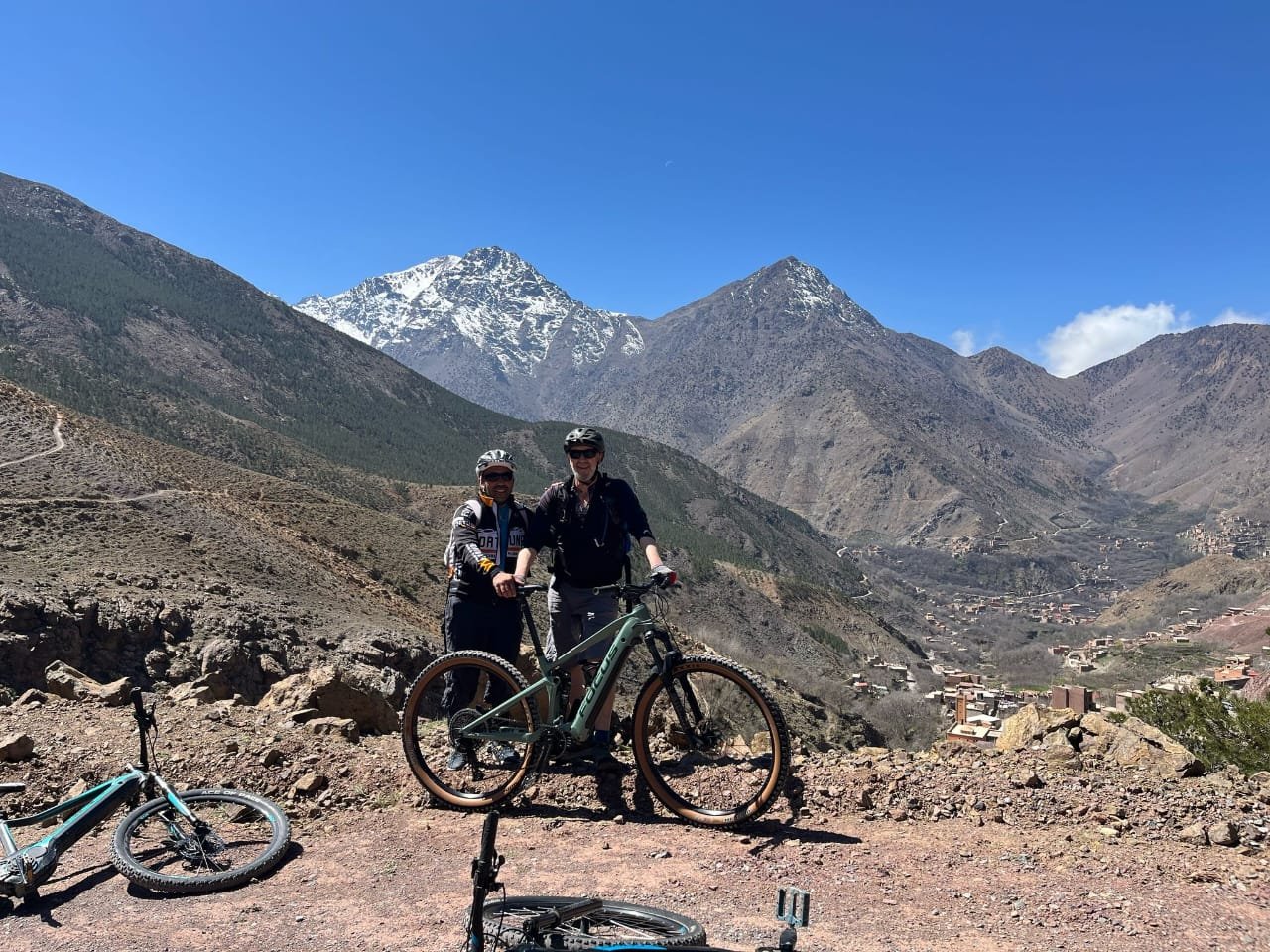
The High Atlas combines dramatic mountain views with trails and tracks that vary considerably by valley and elevation. Some options suit scenic exploration, while others demand stronger technical control and climbing fitness. The Imlil area can be a starting point for mountain-focused itineraries, but the precise route, access and conditions should be confirmed before travel.
Marrakech foothills and Agafay
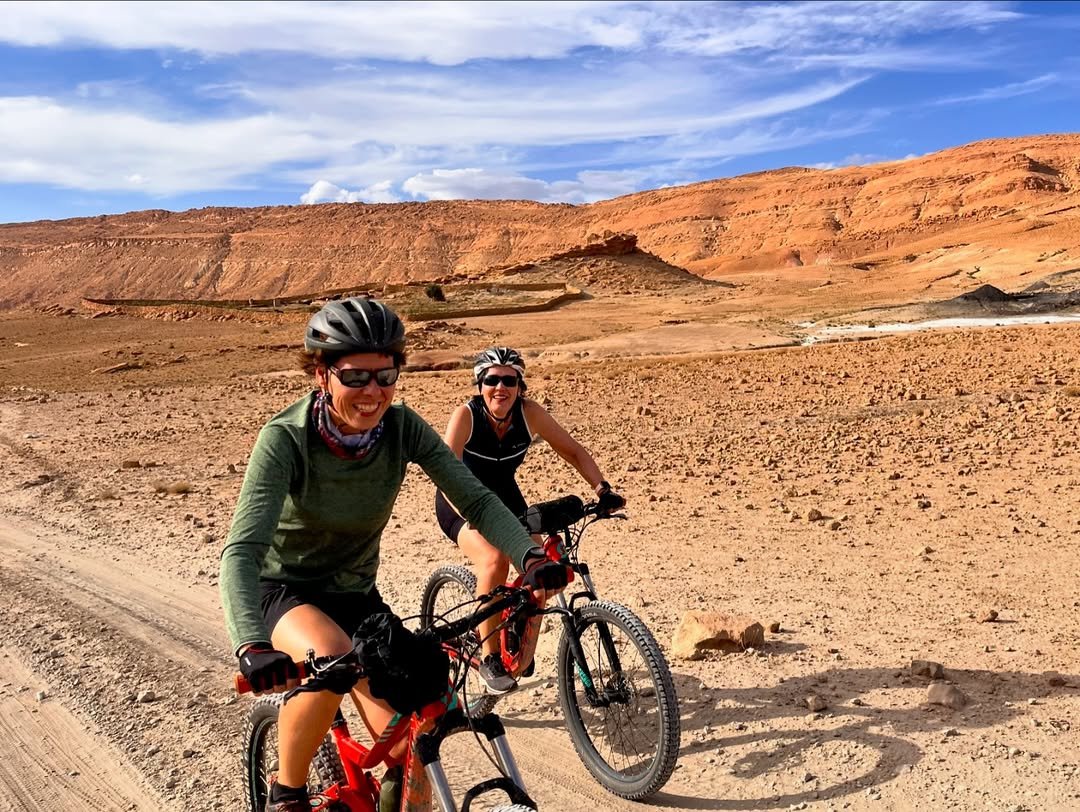
Routes near Marrakech can work well for shorter rides or as an introduction before a longer journey. Agafay’s open rocky landscape feels different from high mountain terrain, and heat, exposure and water capacity deserve attention when choosing the stage and time of day. The surface and route difficulty should be matched to the group rather than selected on scenery alone.
Choose a ride that fits the wider holiday
A trip does not have to be an uninterrupted sequence of long days. Some groups prefer a few focused riding stages with time for markets, local food, rest or cultural visits; others want a more immersive multi-day MTB expedition. Make the balance explicit during planning so transfers, recovery and non-riding activities are built into the schedule.
Local culture and responsible travel
Cycling through rural communities means sharing paths and roads with people going about everyday life. Slow down near homes, pedestrians and animals; give others space; follow the guide’s advice about access; and avoid creating shortcuts around obstacles. Do not assume every track is public or appropriate to ride at speed.
Ask permission before photographing people, especially children, and respect anyone who prefers not to be photographed. Be considerate around homes and community spaces, leave no rubbish, and support local businesses where appropriate. Cultural activities should be arranged with respect for local preferences rather than treated as guaranteed performances or attractions.
Learn a few local greetings, listen to your guide’s advice, and let interactions develop naturally. Small, thoughtful choices can help make the experience positive for both visitors and the communities along the route.
Plan a women’s cycling trip that works for everyone
A strong enquiry gives the organiser enough detail to suggest realistic options. Include intended dates, group size, previous riding experience, preferred cycling style, average daily distance, technical confidence, equipment needs and the type of accommodation you prefer. Mention whether the group wants skills sessions, cultural activities, rest days or a particular balance between challenging riding and relaxed exploration.
Ask for a proposed itinerary with stage details, inclusions, exclusions, transfer arrangements, bike provisions, support expectations and payment terms. Availability and specific services must be confirmed for your dates; a general article cannot guarantee a particular guide, bike model, support vehicle or route condition. Make sure every rider has reviewed the planned difficulty before booking.
Questions to settle before you confirm
- Riding plan: daily distance, ascent, surface, technical level, start and finish points.
- Group support: guide arrangements, regrouping plan, communication and mechanical help.
- Equipment: bike size and fit, helmet, pedals, spares, luggage and E-MTB charging where relevant.
- Logistics: accommodation, meals, transfers, luggage handling, rest time and weather alternatives.
- Costs: what is included, what costs extra, payment terms and cancellation conditions.
Pre-trip checklist
- Choose a route based on actual skills and fitness, not only a broad difficulty grade.
- Confirm bike fit, pedals, helmet availability and test-ride time before the first stage.
- Review daily distance, climbing, surfaces, support arrangements and regrouping procedures.
- Pack layers, sun protection, water capacity, basic personal repair supplies and essential medication.
- Discuss recovery time, cultural activities, accommodation needs and any individual requirements before confirming.
- Check expected weather and ask who will communicate any route changes or travel updates.
Frequently asked questions
Do I need to be an expert mountain biker to join a women-focused trip?
Not necessarily. Suitable trips can be planned for different levels, but the route must match the riders’ actual skills and fitness. Ask for a clear description of terrain, daily distance, climbing, technical features and any sections that may need to be walked before choosing a tour.
Can a women’s cycling trip be arranged for a private group?
You can enquire about a private group itinerary. Share your dates, group size, experience, preferred riding style, daily-distance goals and accommodation preferences. These details help shape a realistic plan, and availability and arrangements should be confirmed directly.
What should we ask about guides and on-trail support?
Ask who will guide the group, how route choice is adapted to ability, what communication and emergency arrangements are used, and what mechanical support or vehicle assistance is available. Clarify how the group will regroup and what happens if a rider needs to stop or change the planned stage.
How can we make sure rental bikes fit properly?
Provide each rider’s height and any fit considerations in advance, then confirm frame sizes, saddle adjustment, cockpit reach, brakes, suspension, pedals and helmet availability. Arrange enough time for a test ride and small adjustments before starting a long or technical stage.
What clothing and equipment should we bring?
Start with a well-fitting helmet, gloves, eye protection, suitable shoes, comfortable riding layers, sun protection and enough water capacity for the planned route. Bring any personal items you rely on, and ask for a route- and season-specific packing list once the itinerary and support arrangements are clear.
How should we approach local culture while cycling in Morocco?
Follow local guidance, slow down around villages and pedestrians, respect private spaces and ask permission before photographing people. Treat stops and conversations as invitations rather than expectations, and support local businesses where appropriate without disrupting daily life.